FY 2018 Proposed Budget: Process and In-Depth Analysis

The Administration’s budget proposal, released on May 23, is the first step in a months-long journey. Now that the Administration has released its recommendations, this Direct News will provide in-depth coverage of how it would affect the Community Development, Section 8 and Public Housing programs administered by HUD.

The budget proposal requests cuts, which if implemented, would be devastating for communities. NAHRO strongly opposes the President’s budget proposal and will work to provide necessary and responsible funding for critical housing and community development programs. NAHRO will also fight for long-overdue program and regulatory reforms that can reduce costly administrative burdens.

Members should note that the President’s request is the beginning and not the end of the budget and appropriations process. The Administration’s budget request has over the years become a political document that reflects the fiscal goals and priorities of the Administration for the upcoming fiscal year. It does not carry the force of law. Congress, who controls the nation’s purse strings, can choose to accept the request wholesale, pick and choose parts of it, or reject it outright, which they frequently do. NAHRO will fight to ensure that work undertaken by our members to address critical housing needs for vulnerable families can be sustained.

NAHRO’s initial review can be found in The NAHRO Blog’s post, “President Officially Releases FY 18 Budget Proposal, Slashes Housing and CD Spending.” NAHRO members click on the links below to review the in-depth FY 2018 budget request analysis for Community Development, Section 8, and Public Housing:

Community Development (NAHRO Login Required)

Section 8 (NAHRO Login Required)

Public Housing (NAHRO Login Required)
President Officially Releases FY 18 Budget Proposal, Slashes Housing and CD Spending

The President’s FY 2018 budget request was officially released today.

The proposal, which largely mirrors the budget preview released in March makes steep cuts to housing and community development programs, slashing the overall HUD budget by $6 billion. The bulk of the cuts are to community development programs, which are largely eliminated. The budget also cuts the Public Housing Capital Fund by 68 percent, requesting a funding level of just $628 million for the upcoming fiscal year. The budget document also mentions that the Administration is working toward a “comprehensive package of rental assistance reforms” including “increased tenant rent contributions, the establishment of mandatory minimum rents, and the end of utility allowance reimbursements, among others.”

These proposed cuts, if implemented, would be devastating for communities. NAHRO strongly opposes the President’s budget proposal and will work to provide necessary and responsible funding for critical housing and community development programs. NAHRO will also fight for long-overdue program and regulatory reforms that can reduce costly administrative burdens. Listed below are the Administration’s proposed 2018 funding levels for programs central to the work of NAHRO’s membership.

  • Public Housing Operating Fund: $3.9 billion, $500 million less than FY 2017
  • Public Housing Capital Fund: $628 million, $1.31 billion less than FY 2017
  • Choice Neighborhoods: $0, $137.5 million less than FY 2017
  • Tenant-Based Rental Assistance: $19.318 billion, $974 million less than FY 2017
  • Section 8 Housing Assistance Payment Renewals: $17.584 billion, $771 million less than FY 2017
  • Ongoing Administrative Fees: $1.54 billion, $100 million less than FY 2017
  • Family Self-Sufficiency: $75 million, level funding from FY 2017
  • Section 8 Project-Based Rental Assistance: $10.751 billion, $65 million less than FY 2017
  • Community Development Block Grant: $0, $3 billion less than FY 2017
  • HOME Investment Partnerships Program: $0, $950 million less than FY 2017
  • Housing Opportunities for Persons with AIDS: $330 million, $26 million less than FY 2017
  • Homeless Assistance Grants: $2.25 billion, $133 million less than FY 2017
  • National Housing Trust Fund: $0, approximately $219 million less than FY 2017

Members should note that the President’s request is the first step in the budget and appropriations process. The Administration’s budget request has over the years become a political document that reflects the fiscal goals and priorities of the Administration for the upcoming fiscal year. It does not carry the force of law. Congress, who controls the nation’s purse strings, can choose to accept the request wholesale, pick and choose parts of it, or reject it outright, which they frequently do.

Though the budget preview released in March was largely rejected by members of Congress, it is still important to communicate to your members of Congress the impact these types of cuts would have in your community.

This year’s budget comes months later than the traditional budget release date of the first Monday in February, placing a serious time constraint on Congress to approve as many appropriations bills as possible prior to leaving Washington for the August recess. Typically, by this time in the year, cabinet agency funding bills for 2018 would have already been approved. For example, the Senate passed the FY 2017 Transportation, Housing, and Urban Development (T-HUD) spending bill on May 19, 2016. Because of this shortened timeline, it is largely expected that a continuing resolution (CR) will be necessary to keep the government functioning beyond the end of the fiscal year on September 30.

Detailed coverage of the 2018 HUD budget request will follow later this week, which will give the membership more specific information and analysis that will assist you in educating and inform decision-makers and other interested parties.

President Signs FY 2017 HUD Spending Bill

After seven months and three continuing resolutions, Congress on Thursday finally approved, and the President on Friday signed, an omnibus spending bill of all 11 remaining appropriations bills, including Transportation, Housing and Urban Development.

The $1.07 trillion deal provides funding for federal departments and agencies until the end of the fiscal year on September 30, 2017. The bill contains level funding or a slight increase to most housing and community development programs, with few exceptions.

The bill was passed on a bipartisan basis easily in both the House and the Senate. On Wednesday, the House approved the bill by 309 to 118 and on Thursday the Senate approved it by 79-18, sending the omnibus to the President for his signature. President Trump signed the bill this afternoon.

The final passage of the omnibus ends more than seven months of delays in finalizing spending for the current fiscal year. Initially opting to postpone making final spending decisions until after the election, Congress approved a short-term spending bill that ran out in mid-December, with the intention of wrapping up work on the fiscal year during the lame duck. However, the then President-elect signaled to Congress that he would like to have input on spending in the current fiscal year, so legislators passed a short-term bill until April 28. Congressional leadership, close to wrapping up negotiations, signaled last week that they needed an additional week of time, requiring the passage of yet another week-long continuing resolution.

The path to a deal was bumpy, but far less rocky than it could have been. Controversial policy riders and requests from the President to fund a border wall with Mexico and an increase defense spending were omitted, likely delaying a larger battle for later in the year. Critically, the parity between defense and non-defense spending was also maintained, a huge victory in a difficult political environment.

NAHRO Acting CEO John Bohm called upon Congress to begin work immediately on a responsible 2018 federal spending bill and expressed concern regarding the year-over-year need to approve continuing resolutions. “Despite promises to return to regular order with regard to the appropriations process,” Bohm said, “NAHRO members continue to struggle to meet local needs given the uncertainties and delays inherent in the approval of continuing resolutions. With the 2018 fiscal year to begin in a mere four months (including the annual August recess) there is at this point every assurance that we will be operating under yet another CR come October. We can do better than this to help those in need.”

Below is a summary of the FY 2017 housing and community development funding levels. The NAHRO Policy Staff has conducted a detailed analysis of the Public Housing, Section 8 and Community Development provisions and funding levels. NAHRO Members can read each of these deep-dive analysis documents on the NAHRO website:


Housing and Community Development Funding Levels

  • Public Housing Programs
    • Public Housing Capital Fund – $1.9415 billion, $41.5 million higher than FY 2016
      • Competitive Lead-Based Paint Grants – $25 million, new program
      • ROSS – $35 million, level funding
      • Emergency Capital Needs – $21.5 million, $500,000 less than FY 2016
      • Jobs Plus – $15 million, level funding
      • PH Financial Physical Assessment – $10 million, $7 million higher than FY 2016
    • Public Housing Operating Fund – $4.4 billion, $100 million less than FY 2016
    • Choice Neighborhoods Initiative – $137.5 million, $12.5 million higher than FY 2016
    • Family Self-Sufficiency – $75 million, level funding
    • RAD – expanded to 225,000 units
  • Section 8 Programs
    • Tenant-Based Rental Assistance – $20.292 billion
      • Section 8 Housing Assistance Payment Renewals – $18.355 billion, $663 million higher than FY 2016
      • Ongoing Administrative Fees – $1.64 billion, level funding
    • Section 8 Project-Based Rental Assistance – $10.816 billion, $196 million higher than FY 2016
  • Community Development Programs
    • Community Development Block Grant – $3 billion, level funding
    • HOME Investment Partnerships – $950 million, level funding
    • Housing Opportunities for Persons with AIDS – $356 million, $21 million higher than FY 2016
    • Homeless Assistance Grants – $2.383 billion, $133 million higher than FY 2016

FY2017 Omnibus Spending Bill Agreement

On Monday, May 1st, an agreed to fiscal year 2017 omnibus appropriations bill was released. The spending deal would fund the Federal government through September 30, 2017. This omnibus must still be voted on in the House and Senate and then be signed by the President but there is optimism and agreement among the parties involved.

The omnibus provides the Department of Housing and Urban Development (HUD) with $38.8 billion for fiscal year 2017, which is a 1 percent increase over fiscal year 2016 levels. Below is a brief breakdown of a few of the HUD program areas. The NAHRO Policy Team will continue to analyze the omnibus and will provide a deep dive analysis once the omnibus becomes law.

Public Housing (PH)

The omnibus funds the PH Operating Fund at $4.4 billion, which is $100 million less than fiscal year 2016.

The PH Capital Fund is funded at $1.9415 billion, an increase of $41.5 million from fiscal year 2016. This capital funding includes set-asides of $35 million for Resident Opportunities and Self-Sufficiency (ROSS), $25 million for new Competitive Lead-Based Paint Hazard Grants, $21.5 million for Emergency Capital Needs, $15 million for Jobs Plus Pilot, and $10 million for PH Financial and Physical Assessment Activities.

Section 8

Tenant-Based Rental Assistance is funded in the omnibus at $20.292 billion, which is an increase of $663 million more than fiscal year 2016. This amount includes set-asides for Section 8 Housing Assistance Payment Renewals funded at $18.355 billion, Ongoing Administrative Fees at $1.640 billion, Special and Ongoing Administrative Fees at $10 million, Tenant Protection Vouchers at $110 million, and new Incremental Vouchers at $57 million. The Mobility Demonstration program is not funded in the FY2017 omnibus appropriation bill.

Community Development

The Community Development Block Grant (CDBG) and the HOME Investments Partnerships Program (HOME) have flat funding at $3 billion and $950 million respectively.

The Housing Opportunities for Persons with AIDS (HOPWA) is funded at $356 million, an increase of $21 million from FY2016 and the Homeless Assistance Grants are funded at $2.383 billion, an increase of $133 million over FY2016 levels.

Other Rental and Service Programs

The Family Self-Sufficiency (FSS) program is funded at the same level as FY2016, $75 million.

Section 8 Project-Based Rental Assistance increased $196 million from FY 2016 levels to $10.816 billion.

The Rental Assistance Demonstration (RAD) program did not receive any additional funding but the cap on the number of units eligible for the program was increased from 185,000 to 225,000 and the RAD program was extended from 2018 to 2020.

The Neighborhood Reinvestment Corporation (NeighborWorks) was funded at $140 million with $5 million to be used for a multi-family rental housing program.

The United States Interagency Council on Homelessness is funded at $3.6 million and is extended to October 1, 2018.

HOME Impact Story in Vancouver, Washington

During National Community Development Week, NAHRO celebrates the hard work of communities across the country by sharing Community Development Block Grant (CDBG) and HOME Investment Partnerships Program (HOME) impact stories, highlighting the importance of these federal affordable housing and community development programs at the local level.

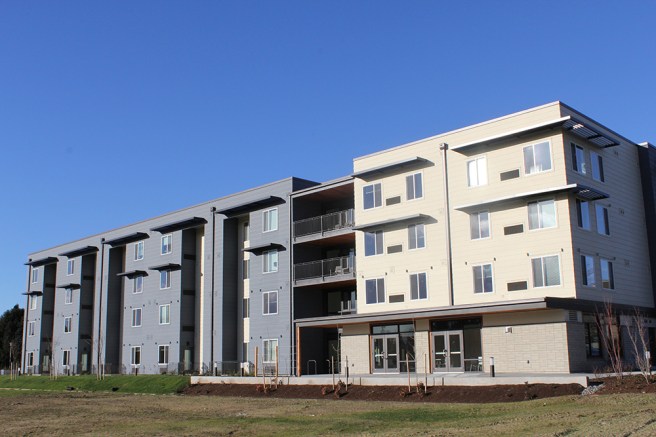
Project name Isabella Court I IMG_3578_Isabella
Location Vancouver, WA
District WA-03
Project Year 2015
Project Description Spearheaded by REACH, one of the largest and most successful Community Development Corporations in Oregon, Isabella Court offers affordable, senior living in Vancouver, Washington. Isabella includes 46 one-bedroom and 3 two-bedroom apartments and is built to the Evergreen Sustainable Development Standard (ESDS), with its focus on energy efficiency and promotion of sustainable living. The Isabella offers vibrant living in the Fourth Plain Corridor, with nearby restaurants, shopping, movie theater, and parks.
Use of HOME Funds New construction and development costs for multifamily rental housing.
Target Population Apartments are reserved for households 62 years of age and over earning 60% or less of the area median income.
HOME Funds $2,518,734 were provided by the Washington State Department of Commerce, the City of Vancouver and Clark County Community Services.
Other Funds 10 Project-Based Section 8 vouchers valued at $331,200; LIHTC; Tax-exempt bonds; State Housing Trust Fund. Total project cost: $12,476,777.
Project Impact The investment of these HOME funds and other leveraged dollars brought one of the first rent-restricted senior developments to the City of Vancouver in almost ten years and supplied the area economy with construction jobs with a living wage. The affordable housing provided much needed apartments to a City with one of the highest percentage rent increases in the nation between 2015 and 2016. Other impacts of this project include municipal economic development, job skills training, apprenticeship and neighborhood revitalization for one of the poorest Census Tracts in Clark County.
Contact Ben Sturz – bsturtz@reachcdc.org www.reachcdc.org

CDBG Impact Stories in Washington County, Minnesota

During National Community Development Week, NAHRO celebrates the hard work of communities across the country by sharing Community Development Block Grant (CDBG) and HOME Investment Partnerships Program (HOME) impact stories, highlighting the importance of these federal affordable housing and community development programs at the local level.

CDBG is a flexible federal program and Washington County, Minnesota has used CDBG dollars to strengthen their communities through a wide variety of projects:

  • Affordable senior housing so that the elderly population may comfortably age in place;
  • zero percent home improvement loans for families and seniors to fund repairs that these homeowners might not otherwise be able to afford; and
  • an expanded local food bank so that additional fresh produce and meats are available to their growing number of clients.
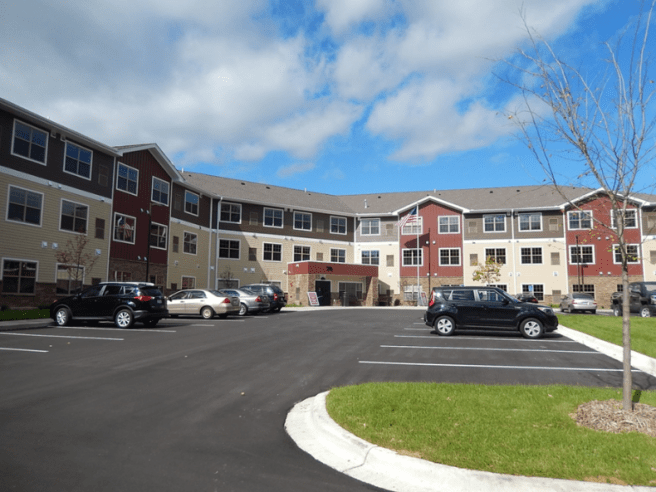
Project name Piccadilly Square Senior Housing BuildingPiccadilly Square
Location Mahtomedi, Minnesota
District MN-04
Project year 2015
Use of CDBG funds Soil remediation for redevelopment
Project Description The Piccadilly Square Senior Housing Building is a 79-unit affordable senior housing development for seniors 62 or older with incomes at or below $35,000. Developed through the joint effort of the Washington County Housing and Redevelopment Authority and a private developer, CDBG funds were used for soil remediation of 3 acres for redevelopment of a former restaurant site at the edge of downtown Mahtomedi.

Piccadilly Square enables seniors to age in place. A senior service coordinator is available to all tenants to proactively problem solve issues affecting seniors ability to live well and safely in their units.  Building design includes: 5 wheelchair accessible units and 9 units with accessible communication features for residents who are deaf or hearing impaired; roll-in showers in all units; ample space in unit and common area spaces for walker/wheelchair mobility; no threshold curb at main entry; and two elevators.

Target population Low-income, elderly
Amount of CDBG funds $352,709
Other project funds; leverage $14,078,516; 1:98. HOME, 4% Low-Income Housing Tax Credit, Tax Exempt bonds, Federal Home Loan Bank Board, Metropolitan Council Livable Community Act funds, and City fee waivers.
Jobs created 28 temporary jobs
Project impact Not only does the apartment complex allow low-income seniors to comfortably age in place (full occupancy of the 79-unit building is expected in summer of 2017), but this project has contributed to the beautification of the downtown area. The restaurant previously located on the site had been shuttered since 2005 and was badly deteriorating. The project called for razing the building and extensive environmental cleanup of the soil. City officials expect Piccadilly Square to “spur things happening in the downtown area.”
Contact Washington County Community Development Agency BDacy@wchra.com
Project name Owner Occupied Rehabilitation Loan ProgramWashington Co Loan Program
Location Throughout Washington County, Minnesota
District MN-02, MN-04, MN-06
Project year Yearly
Use of CDBG funds Homeowner housing rehabilitation
Project description Administered by the Greater Metropolitan Housing Corporation (GMHC), this program offers deferred, 0% interest loans to homeowners in Washington County for home improvements to low-income families or seniors that might not otherwise be able to afford repairs.
Target population Families and the elderly
Amount of CDBG funds $207,000
Project impact 10 to 15 homes a year
Contact www.gmhchousing.org
   
Project name Hugo Good Neighbors Food ShelfHugo Food Shelf
Location Hugo, Minnesota
District MN-04
Project year 2014
Use of CDBG funds Land acquisition for construction so that HGNFS could move into a new and improved space.
Project description Opened in May 2009, the Hugo Good Neighbors Food Shelf (HGNFS) was started by a group of volunteers in response to the needs of their neighbors, whom were struggling to meet their financial obligations and provide food to their families. It was critical to the community that the food shelf conduct itself with a philosophy of operational transparency and as an independent, stand-alone Food Shelf, not affiliated with any other private organization. With this in mind, and with the full support of the City of Hugo, HGNFS was developed as a non-profit 501(c)3 organization. Significant growth of HGNFS over the last seven years spurred the need for a larger space – the previous food shelf had been operating out of a small garage that housed the Hugo Fire Department’s fire truck over 30 years ago and had inadequate heating and cooling and no running water.
Target population Extremely low-income families, seniors, youth, homeless.
Amount of CDBG funds $70,000
Other project funds; leveraging Bank Loan $202,414; 1:4
Project impact In the early days, HGNFS served, on average, served 10 households per month. In 2012, the other food shelf located in the community closed its doors, leaving HGNFS as the sole provider of food shelf service for the growing community. As a result, clients have doubled and they now serve, on average, 125 households per month. Thanks to the CDBG program, the new building has the additional space needed to offer more fresh produce and meats to their clients.
 Contact  www.hugofoodshelf.org
   

NAHRO Sends Letters to HUD on HOTMA and Triennial Certifications

In order to maintain the spotlight on issues important to our members, NAHRO sent two letters to HUD last week.

The first letter (member login required) was on the Housing Opportunity Through Modernization Act of 2016 (HOTMA) and focused on the Project-Based Voucher (PBV) provisions that HUD is currently implementing through Federal Register notice. In addition to other provisions, this notice included two provisions very important to our members. The first allows PHAs to choose to calculate their general project-based cap based on either voucher funding or voucher allocation. The second allows PHAs to project-base up to 30 percent of their vouchers in units targeted to the homeless, veterans, elderly, people with disabilities or in areas where vouchers are difficult to use. HUD has been discussing reopening this Federal Register notice for additional public comment. NAHRO’s letter explained the importance of these provisions to PHA operational flexibility and local housing need, while noting that if the public comment period is reopened, the effective date in the original notice of April 18, 2017 should remain.

The second letter (member login required) was on the triennial recertification interim final rule required by the Fixing America’s Surface Transportation (FAST) Act. Language permitting triennial recertifications was a hard-earned and significant win for PHAs across that country that are currently facing historically low levels of federal funding. On January 19, 2017, HUD previewed an interim final rule that would implement the triennial recertification provision of the FAST Act, but it was never actually published in the Federal Register due to the regulatory freeze on the new administration, so the FAST Act triennial recertification provisions were not implemented. NAHRO’s letter asked for the FAST Act triennial recertification interim final rule to be published, since the 60-day regulatory freeze period is now over.

NAHRO Releases 2017 Legislative and Regulatory Agenda

2017 Leg Agenda CoverAs the 2017 Washington Conference begins this week, we are proud to present NAHRO’s 2017 Legislative and Regulatory Agenda.

This year’s agenda builds on our previous Transition 2017, Legislative and Regulatory Year in Review – 2016 documents. It also serves as an extension of our outreach to the new Congress, which introduces NAHRO and its positions. The 2017 Legislative and Regulatory Agenda provides specific priorities and positions that will guide the NAHRO legislative and regulatory roadmap for the coming year.

This agenda is not intended to catalogue all the efforts and policies that NAHRO will actively pursue in 2017. There are many issues — including ones that may rise in priority as federal policymakers act over the course of the year — that will feature prominently in NAHRO’s efforts on behalf of its members and the communities they serve.

Our most vulnerable citizens find a safe harbor and a place to call home in the work of public housing authorities and community development agencies. NAHRO members will continue to meet the challenge of building stronger communities and ensuring that all Americans have a stable, affordable place to call home in which they can live, grow and thrive.

Please read, review, and share NAHRO’s 2017 Legislative and Regulatory Agenda, and feel free to use it to develop and coordinate your agency, local, county, state and regional legislative and regulatory advocacy plans for 2017.

New and updated legislative and regulatory information is available on the Congressional Relations and Policy & Program Development webpages on the NAHRO website and on the NAHRO Blog.

Senators Reintroduce the Bipartisan Affordable Housing Credit Improvement Act

Yesterday, Senator Maria Cantwell (D-WA) and Senate Finance Committee Chairman Orrin Hatch (R-UT) introduced the Affordable Housing Credit Improvement Act of 2017 (S. 548), a comprehensive bill that would strengthen and expand the Low-Income Housing Tax Credit (Housing Credit). This legislation is very similar to the version of the Affordable Housing Credit Improvement Act (S. 3237) introduced by the same Senators last year, but with minor modifications.

Earlier this week, Senator Cantwell released a new report that chronicles the nationwide shortage of affordable housing. In her press release, Senator Cantwell said, “[w]e are facing pressures from all sides: demand for rental housing has increased by 21 percent, but we are building units at the lowest rate since the 1970s. If we do not act to increase the Low-Income Housing Tax Credit-our best way to build new affordable homes-by 2025 over 15 million Americans could be spending half of their income on rent. This is unacceptable.”

S. 548 seeks to take steps towards addressing the affordable housing deficit by increasing the overall Housing Credit authority by 50 percent. The legislation also includes other provisions that would streamline and modernize the Housing Credit, increase financial feasibility for projects, and encourage development in underserved areas. The legislation would also support the development of rental units that use the Housing Credit in conjunction with multifamily Housing Bonds, which currently provide important financing to about 40 percent of all Housing Credit apartments.

S. 548 has bipartisan support on the Hill and there are currently eleven other original co-sponsors to the bill: Senate Finance Committee Ranking Member Ron Wyden (D-OR), and Senators Susan Collins (R-ME), Dean Heller (R-NV), Lisa Murkowski (R-AK), Todd Young (R-IN), Charles Schumer (D-NY), Michael Bennet (D-CO), Cory Booker (D-NJ), Patrick Leahy (D-VT), Jeff Merkley (D-OR), and Brian Schatz (D-HI). Also recently, over 2,000 organizations across the country, including NAHRO, signed on to the ACTION Campaign’s letter to Congress in support of S. 548.

More information on the bill by the ACTION Campaign can found here:

NAHRO’s Call for Session Proposals for the 2017 Summer Conference is Now Open.

2017-sc-banner-600x100

NAHRO’s Call for Session Proposals for the 2017 Summer Conference is now open.

Share your experience as a housing and community development professional by submitting a session proposal for consideration as a presentation at the 2017 NAHRO Summer Conference in Indianapolis, IN. We are looking for sessions on current and emerging issues, best practices, and strategies to handle challenges facing the industry.

Session proposals should fall under one of the following identified topic tracks – Public Housing, Section 8/HCV, H/CD Finance, Community Development, Commissioners, Organizational Management and International.

Deadline to submit: March 15 and proposals must be submitted thru NAHRO’s on-line submission tool.

Submissions should be complete with a clear and concise session title, description, three learning objectives and identified panelists.