Updated HAP Proration for FY 2017 Budget

NAHRO received word from HUD that its latest Housing Assistance Payment (HAP) proration forecast for the Housing Choice Voucher (HCV) Program FY 2017 budget is 97.277 percent. This number has been entered into HUD’s forecasting tool as the default proration for FY 2017. NAHRO was previously reporting a HAP proration of 97.5 percent for the FY 2017 budget.

[5/5/17 1:37 pm ET edit – We have learned from HUD that their current estimate of the administrative fee proration for the FY 2017 budget is 75.7 percent. NAHRO has been reporting a 75 percent proration.]

NAHRO members can find a more detailed analysis of the budget here.

HUD Releases Guidance for Shortfall and Administrative Fees for HCV Program

On April 26, HUD released a notice (PIH 2017-07) titled “Guidance Related to (1) Eligibility for Potential Shortfall Funding Under the Calendar Year (CY) 2017 Housing Assistance Payments (HAP) Renewal Set-Aside for the Housing Choice Voucher (HCV) Program and (2) CY 2017 Administrative Fees.” The notice provides guidance for eligibility for shortfall funding when available and information on administrative fees.

Shortfall Guidance – For PHAs that have been identified by their field offices or the Shortfall Prevention Team as at risk or potentially at risk for a shortfall, the following actions must be taken upon instruction by the Shortfall Prevention Team:

  1. Continue to work with the Field Office or Shortfall Prevention Team;
  2. Cease issuing vouchers as of the date notified of the potential shortfall (though certain exceptions apply);
  3. Rescind vouchers that were issued to applicant families and stop leasing rescinded vouchers as of the date the PHA is notified of the potential shortfall;
  4. Cease absorbing portable vouchers; and
  5. Stop issuing vouchers for households that have project-based vouchers, but want to voluntarily move with tenant-based assistance.

If shortfall funding is available, it will be made contingent on housing authorities have taken the steps listed above, when instructed by the Shortfall Prevention Team.

Administrative Fee Guidance – For CY 2017, HUD intends to make $10,000,000 available for PHAs that need additional funds to administer their Section 8 programs. The following fee categories are available:

  1. Homeownership Fees – HUD provides a $200 special fee for every homeownership closing reported in PIC for families participating in the Voucher Homeownership, Section 8 Family Self-Sufficiency, or Section 8 MTW Homeownership programs.
  2. Special Fees for Multifamily Housing Conversion Actions – For multifamily housing conversions, a special (one-time) fee of $200 will be provided for each unit occupied on the date of the eligibility event.
  3. Special Fees for Portability – Receiving PHAs, where portability vouchers comprise a significant portion (20 percent or more) of their vouchers under lease, are eligible for a special fee. While PHAs do not need to apply for these funds, PHAs should ensure that all PIC data has been updated and successfully submitted no later than 5 pm ET, May 22, 2017.
  4. Special Fees for Audit Costs Related to HCV Voluntary Transfers – To request fees under this category, please see notice PIH 2015-22 titled “Process for Public Housing Agency Voluntary Transfers and Consolidations of Housing Choice Vouchers, Mainstream 5 Year Vouchers, Project-Based Vouchers and Project-Based Certificates.”
  5. Other special fees under the Secretary’s discretion.

Blended Administrative Fees –  PHAs that serve multiple administrative fee areas may request a blended rate based on the actual location of their assisted units. Requests for blended rates must be received by, close of business, 5 pm ET, May 22, 2017. PHAs can send electronic requests for blended rate fees by emailing PIHFinancialManagementDivision@hud.gov. The subject line should read “PHA Number (i.e., PHA xxx), 2017 Request for Blended Rate Administrative Fees.”

Higher Administrative Fees – A PHA that operates over a large geographic area (multiple counties) may request higher administrative fees. The PHA will have to submit actual costs at the end of the calendar year to enable HUD to determine if the approved increase was needed. To apply for higher administrative fees, a PHA must submit certain documentation to their assigned Financial Analyst by the close of business, 2 pm CT, May 22, 2017.

NAHRO will provide additional coverage of this notice to our members. The notice can be found here.

FY2017 Omnibus Spending Bill Agreement

On Monday, May 1st, an agreed to fiscal year 2017 omnibus appropriations bill was released. The spending deal would fund the Federal government through September 30, 2017. This omnibus must still be voted on in the House and Senate and then be signed by the President but there is optimism and agreement among the parties involved.

The omnibus provides the Department of Housing and Urban Development (HUD) with $38.8 billion for fiscal year 2017, which is a 1 percent increase over fiscal year 2016 levels. Below is a brief breakdown of a few of the HUD program areas. The NAHRO Policy Team will continue to analyze the omnibus and will provide a deep dive analysis once the omnibus becomes law.

Public Housing (PH)

The omnibus funds the PH Operating Fund at $4.4 billion, which is $100 million less than fiscal year 2016.

The PH Capital Fund is funded at $1.9415 billion, an increase of $41.5 million from fiscal year 2016. This capital funding includes set-asides of $35 million for Resident Opportunities and Self-Sufficiency (ROSS), $25 million for new Competitive Lead-Based Paint Hazard Grants, $21.5 million for Emergency Capital Needs, $15 million for Jobs Plus Pilot, and $10 million for PH Financial and Physical Assessment Activities.

Section 8

Tenant-Based Rental Assistance is funded in the omnibus at $20.292 billion, which is an increase of $663 million more than fiscal year 2016. This amount includes set-asides for Section 8 Housing Assistance Payment Renewals funded at $18.355 billion, Ongoing Administrative Fees at $1.640 billion, Special and Ongoing Administrative Fees at $10 million, Tenant Protection Vouchers at $110 million, and new Incremental Vouchers at $57 million. The Mobility Demonstration program is not funded in the FY2017 omnibus appropriation bill.

Community Development

The Community Development Block Grant (CDBG) and the HOME Investments Partnerships Program (HOME) have flat funding at $3 billion and $950 million respectively.

The Housing Opportunities for Persons with AIDS (HOPWA) is funded at $356 million, an increase of $21 million from FY2016 and the Homeless Assistance Grants are funded at $2.383 billion, an increase of $133 million over FY2016 levels.

Other Rental and Service Programs

The Family Self-Sufficiency (FSS) program is funded at the same level as FY2016, $75 million.

Section 8 Project-Based Rental Assistance increased $196 million from FY 2016 levels to $10.816 billion.

The Rental Assistance Demonstration (RAD) program did not receive any additional funding but the cap on the number of units eligible for the program was increased from 185,000 to 225,000 and the RAD program was extended from 2018 to 2020.

The Neighborhood Reinvestment Corporation (NeighborWorks) was funded at $140 million with $5 million to be used for a multi-family rental housing program.

The United States Interagency Council on Homelessness is funded at $3.6 million and is extended to October 1, 2018.

HOME Impact Story in Vancouver, Washington

During National Community Development Week, NAHRO celebrates the hard work of communities across the country by sharing Community Development Block Grant (CDBG) and HOME Investment Partnerships Program (HOME) impact stories, highlighting the importance of these federal affordable housing and community development programs at the local level.

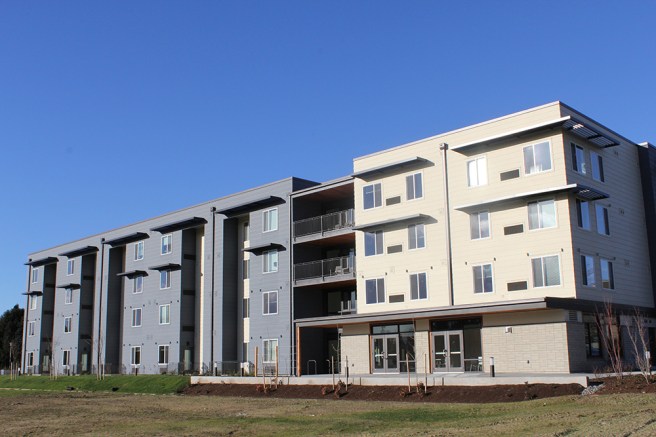
Project name Isabella Court I IMG_3578_Isabella
Location Vancouver, WA
District WA-03
Project Year 2015
Project Description Spearheaded by REACH, one of the largest and most successful Community Development Corporations in Oregon, Isabella Court offers affordable, senior living in Vancouver, Washington. Isabella includes 46 one-bedroom and 3 two-bedroom apartments and is built to the Evergreen Sustainable Development Standard (ESDS), with its focus on energy efficiency and promotion of sustainable living. The Isabella offers vibrant living in the Fourth Plain Corridor, with nearby restaurants, shopping, movie theater, and parks.
Use of HOME Funds New construction and development costs for multifamily rental housing.
Target Population Apartments are reserved for households 62 years of age and over earning 60% or less of the area median income.
HOME Funds $2,518,734 were provided by the Washington State Department of Commerce, the City of Vancouver and Clark County Community Services.
Other Funds 10 Project-Based Section 8 vouchers valued at $331,200; LIHTC; Tax-exempt bonds; State Housing Trust Fund. Total project cost: $12,476,777.
Project Impact The investment of these HOME funds and other leveraged dollars brought one of the first rent-restricted senior developments to the City of Vancouver in almost ten years and supplied the area economy with construction jobs with a living wage. The affordable housing provided much needed apartments to a City with one of the highest percentage rent increases in the nation between 2015 and 2016. Other impacts of this project include municipal economic development, job skills training, apprenticeship and neighborhood revitalization for one of the poorest Census Tracts in Clark County.
Contact Ben Sturz – bsturtz@reachcdc.org www.reachcdc.org

CDBG Impact Stories in Washington County, Minnesota

During National Community Development Week, NAHRO celebrates the hard work of communities across the country by sharing Community Development Block Grant (CDBG) and HOME Investment Partnerships Program (HOME) impact stories, highlighting the importance of these federal affordable housing and community development programs at the local level.

CDBG is a flexible federal program and Washington County, Minnesota has used CDBG dollars to strengthen their communities through a wide variety of projects:

  • Affordable senior housing so that the elderly population may comfortably age in place;
  • zero percent home improvement loans for families and seniors to fund repairs that these homeowners might not otherwise be able to afford; and
  • an expanded local food bank so that additional fresh produce and meats are available to their growing number of clients.
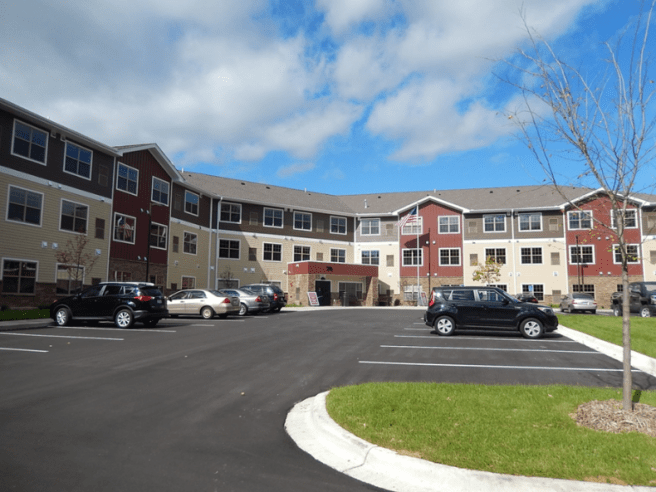
Project name Piccadilly Square Senior Housing BuildingPiccadilly Square
Location Mahtomedi, Minnesota
District MN-04
Project year 2015
Use of CDBG funds Soil remediation for redevelopment
Project Description The Piccadilly Square Senior Housing Building is a 79-unit affordable senior housing development for seniors 62 or older with incomes at or below $35,000. Developed through the joint effort of the Washington County Housing and Redevelopment Authority and a private developer, CDBG funds were used for soil remediation of 3 acres for redevelopment of a former restaurant site at the edge of downtown Mahtomedi.

Piccadilly Square enables seniors to age in place. A senior service coordinator is available to all tenants to proactively problem solve issues affecting seniors ability to live well and safely in their units.  Building design includes: 5 wheelchair accessible units and 9 units with accessible communication features for residents who are deaf or hearing impaired; roll-in showers in all units; ample space in unit and common area spaces for walker/wheelchair mobility; no threshold curb at main entry; and two elevators.

Target population Low-income, elderly
Amount of CDBG funds $352,709
Other project funds; leverage $14,078,516; 1:98. HOME, 4% Low-Income Housing Tax Credit, Tax Exempt bonds, Federal Home Loan Bank Board, Metropolitan Council Livable Community Act funds, and City fee waivers.
Jobs created 28 temporary jobs
Project impact Not only does the apartment complex allow low-income seniors to comfortably age in place (full occupancy of the 79-unit building is expected in summer of 2017), but this project has contributed to the beautification of the downtown area. The restaurant previously located on the site had been shuttered since 2005 and was badly deteriorating. The project called for razing the building and extensive environmental cleanup of the soil. City officials expect Piccadilly Square to “spur things happening in the downtown area.”
Contact Washington County Community Development Agency BDacy@wchra.com
Project name Owner Occupied Rehabilitation Loan ProgramWashington Co Loan Program
Location Throughout Washington County, Minnesota
District MN-02, MN-04, MN-06
Project year Yearly
Use of CDBG funds Homeowner housing rehabilitation
Project description Administered by the Greater Metropolitan Housing Corporation (GMHC), this program offers deferred, 0% interest loans to homeowners in Washington County for home improvements to low-income families or seniors that might not otherwise be able to afford repairs.
Target population Families and the elderly
Amount of CDBG funds $207,000
Project impact 10 to 15 homes a year
Contact www.gmhchousing.org
   
Project name Hugo Good Neighbors Food ShelfHugo Food Shelf
Location Hugo, Minnesota
District MN-04
Project year 2014
Use of CDBG funds Land acquisition for construction so that HGNFS could move into a new and improved space.
Project description Opened in May 2009, the Hugo Good Neighbors Food Shelf (HGNFS) was started by a group of volunteers in response to the needs of their neighbors, whom were struggling to meet their financial obligations and provide food to their families. It was critical to the community that the food shelf conduct itself with a philosophy of operational transparency and as an independent, stand-alone Food Shelf, not affiliated with any other private organization. With this in mind, and with the full support of the City of Hugo, HGNFS was developed as a non-profit 501(c)3 organization. Significant growth of HGNFS over the last seven years spurred the need for a larger space – the previous food shelf had been operating out of a small garage that housed the Hugo Fire Department’s fire truck over 30 years ago and had inadequate heating and cooling and no running water.
Target population Extremely low-income families, seniors, youth, homeless.
Amount of CDBG funds $70,000
Other project funds; leveraging Bank Loan $202,414; 1:4
Project impact In the early days, HGNFS served, on average, served 10 households per month. In 2012, the other food shelf located in the community closed its doors, leaving HGNFS as the sole provider of food shelf service for the growing community. As a result, clients have doubled and they now serve, on average, 125 households per month. Thanks to the CDBG program, the new building has the additional space needed to offer more fresh produce and meats to their clients.
 Contact  www.hugofoodshelf.org
   

HOME Impact Story in Lawrence, Kansas

During National Community Development Week, April 17-22, NAHRO celebrates the hard work of communities across the country by sharing Community Development Block Grant (CDBG) and HOME Investment Partnerships Program (HOME) impact stories, highlighting the importance of these federal affordable housing and community development programs at the local level.

Project name Cedarwood Senior Cottages

A883A166-D713-413C-9F65-616FABCDD0D5

Location and District Lawrence, Kansas (KS-02)
Project Year Construction completed 2015-2016. Leased up by March 2017
Project Description Built by Tenants to Homeowners, Inc. (a nonprofit CHDO) and community partners, Cedarwood is an innovative affordable senior housing complex with 14 individual cottages, including 10 with garages, and a community room in the heart of the property. There are 9 two-bedroom units and 5 one-bedroom units that are fully accessible, Energy-Star 3 certified, and use health and safety smart technology (a smart sensor system can track movement in the home and the community room includes a touch screen kiosk that provide residents with helpful information and resources). All these features are meant to allow seniors to age in place.

Cedarwood meets a local housing need for middle-income seniors who want to remain independent but earn too much to live in a subsidized home and not enough to afford a senior living facility. According to local news coverage of Cedarwood, “[t]he need for affordable senior housing is only likely to increase, with the baby boomer generation reaching retirement age. An estimated 10,000 Americans will turn 65 every day through 2029. Meanwhile, a local retiree attraction task force in 2012 identified affordable senior housing as a need in the community.” Cedarwood can serve as a model for future senior housing projects in the community.

Use of HOME HOME funds were used for construction.
Target Population Elderly (62+), 9 HOME units with 4 targeted at below 50% and 5 targeted below 60%. The remaining 5 units target 60-80% median family income.
HOME Funds $167,000 from City of Lawrence HOME funds and $525,000 from State Kansas HOME funds.
Other Funds $260,000 lot donation (1.3 acres) from Douglas County, Kansas; $100,000 from City of Lawrence fee waivers and in-kind infrastructure; $600,000 CHDO equity from Tenants to Homeowners, Inc.; $420,000 in Federal Home Loan Bank Affordable Housing Program funds; $500,000 construction and permanent loan financing from Truity Credit Union.
Jobs Created $2.3 million project using all local vendors, 3 temporary jobs created for 24 months (Davis Bacon did not apply).
Project Impact Cedarwood currently serves 13 households with 16 seniors and the project has added value to the local Qualified Census Tract. Furthermore, the project puts senior housing in a central location with available public transportation, services, and shopping. Cedarwood also demonstrates how smart technology can be used to help seniors age in place and save the community in unnecessary early assisted care expenses.

The project also improved the use of a vacant infill lot that sits next to a nonprofit incubator building; providing independent living and a senior community within a residential neighborhood that links to senior services that are offered by nonprofits. This allows for intergenerational activities and senior social interaction as well as shared services.

Quote from a beneficiary: “It is been really nice. My dog Daisy is really happy here and we are able to take walks in the neighborhood and stay active.” -Holly Holbert, resident since July 1, 2016.

Contact Rebecca Buford, Executive Director, TTH, Inc. rbufordefird@yahoo.com 785-760-2058

HUD Corrects FY16 Housing Trust Fund Allocations

On April 13, HUD announced in the Federal Register that approximately $120,913 in Housing Trust Fund (HTF) dollars was incorrectly allocated to grantees for fiscal year (FY) 2016. HUD first announced FY 2016 HTF formula allocations to grantees, which total about $173 million, in May 2016. HUD subsequently discovered an error it its calculations for American Samoa, Guam, the Commonwealth of Northern Marina Island, and the U.S. Virgin Islands. Accordingly, allocations for the Insular Areas have been reduced while allocations for 15 states and the Commonwealth of Puerto Rico have increased slightly.

The states receiving the largest increase under the new allocation include: California ($28,296 increase), New York ($19,961 increase), and Texas ($11,112). While Florida, Illinois, Ohio, Pennsylvania, Michigan, New Jersey, Massachusetts, Georgia, North Carolina, Washington, Virginia, and Puerto Rico each receive increases that range from $1,000 to $10,000.

In the coming weeks, HUD is expected to announce the HTF formula allocations for FY 2017. Based on Fannie Mae and Freddie Mac’s (GSEs) recent SEC filings, a boost in GSE business last year means that the HTF could be receiving about $219 million for FY 2017. While we expect FY 2017 allocations to be available this year, it is possible that some Congress members may try to introduce bills to eliminate or divert HTF funding to other programs, similar to what happened in last Congress. Further more, the Federal Housing Finance Agency (FHFA) has ultimate authority over whether the GSEs continue to set aside contributions to the HTF. If the current Obama-appointed FHFA Director Mel Watt, resigns early, or if Congress and the Administration decides to move forward on housing finance reform, the status of the HTF will come into question.

National Community Development Week 2017 — April 17-22: Celebrating the Important Work of CDBG and HOME

NAHRO, along with fellow members of the Community Development Block Grant (CDBG) Coalition, will be celebrating National Community Development Week, April 17-22, 2017. Over the course of this week, communities across the country will celebrate the work of the CDBG Program and the HOME Investment Partnerships (HOME) Program.

The CDBG program provides grants to over 1,200 state and local governments and funds activities such as housing rehabilitation, business assistance, senior services, and infrastructure – to name a few. These activities are primarily targeted to low-income persons and households. Every $1.00 of CDBG leverages another $3.65 in other funding; bringing additional resources to communities that support jobs, businesses and, most importantly, the people who live in these communities.

HOME provides grants to over 600 State and local governments to create safe, decent and affordable housing, both rental and homeowner. HOME is a vital federal housing program that allows communities to leverage $4.20 of public and private dollars for every HOME dollar invested.

CDBG and HOME have been proposed for elimination in the President’s FY 2018 HUD budget and National Community Development Week provides the opportunity for Congressional Members and the community to see first-hand the results of these programs by touring projects, meeting with state and local staff and interacting directly with beneficiaries served by the programs.

NAHRO is urging members a to participate in National Community Development Week by supporting local project tours, issuing proclamations, engaging and educating Congressional Members on the programs, and reaching out to the media to promote the impact of CDBG and HOME. Here’s what you can can do:

Learn

Advocate

  • Contact and engage with your members of Congress to schedule meetings and plan a site visit of a local projects to show how these programs have helped your community. Remember –  Congress is in recess through April 23 and lawmakers will be back in their districts
  • Send letters to your legislators using NAHRO’s pre-drafted Advocacy Action Center letter telling Congress to take action today to finalize FY 2017 spending and pass a full-year Transportation, Housing and Urban Development spending bill.
  • Join over 2,000 local, state and national organizations and sign on to the CDBG support letter seeking $3.3 billion for CDBG in FY 2018. This letter will be sent to Appropriations Committee leaders in May.

Spread the Word

  • Share your impact story by writing and submitting a Letter to the Editor or op-ed to your local newspaper. Make sure to mention your members of Congress so it gets picked up in their daily clips.
  • Join @NAHROnational on Twitter and elevate awareness of the need for – and the impact of – CDBG and HOME through tweets. Make sure to use the following hashtags: #CDBG #CDBGImpact #Fight4CDBG #HOME #HOMEImpact, and to tag your House and Senate representatives.
  • Follow and share the NAHRO Blog where we will post success stories of CDBG and HOME submitted by NAHRO members throughout week.

Connect with NAHRO

  • If your impact story was published in your local newspaper or you meet with your member of Congress, let us know! Please email Jenny Hsu at jhsu@nahro.org with a description of your advocacy efforts so that we can highlight your efforts with Congress once they are back in session.

CDBG Coalition Members: NAHRO, U.S. Conference of Mayors, National Association of Counties, National League of Cities, National Community Development Association, Council of State Community Development Agencies, National Association for County Community and Economic Development, National Association of Development Organizations, American Planning Association, Local Initiatives Support Corporation, Habitat for Humanity International, Feeding America, YWCA USA, Enterprise Community Partners, Rebuilding Together, National Recreation and Park Association, National Association of Regional Councils, National Urban League, International Economic Development Council, Heartland Alliance, The Trust for Public Land, and National Development Council

TPV Funding for FY 2016 Announced

Today, HUD published a list of funding awards for Tenant Protection Vouchers (TPVs) for FY 2016. These vouchers are funded non-competitively on an as-needed basis. They are funded on a first-come, first-serve basis for households that are displaced due to HUD program actions.

TPVS were awarded for the following actions:

  1. to assist families living in HUD-owned properties that are being sold;
  2. to assist families affected by the expiration or termination of their Project-based Section 8 and Moderate Rehabilitation contracts;
  3. to assist families in properties where the owner has prepaid the HUD mortgage;
  4. to assist families in projects where the Rental Supplement and Rental Assistance Payments contracts are expiring (RAD—Second Component);
  5. to provide relocation housing assistance in connection with the demolition of public housing;
  6. to provide replacement housing assistance for single room occupancy (SRO) units that fail housing quality standards (HQS);
  7. to assist families in public housing developments that are scheduled for demolition in connection with a HUD-approved HOPE VI revitalization or demolition grant; and (8) to assist families consistent with PIH Notice 2016-12, “Funding Availability for Tenant-Protection Vouchers for Certain At-Risk Households in Low-Vacancy Areas—Fiscal Year 2016” and PIH Notice 2015-07, “Funding Availability for Tenant-Protection Vouchers for Certain At-Risk Households in Low-Vacancy Areas—Fiscal Year 2015.”

In total, HUD awarded $86,970,667 for 9,606 housing choice vouchers. The notice lists the awardees alphabetically by state.

The full notice can be read here.

HUD to Host MTW Listening Sessions

Earlier today, a NAHRO member forwarded an email sent by General Deputy Assistant Secretary Bryon of HUD’s Office of Public and Indian Housing announcing four listening sessions “for PHAs that are interested in applying to MTW and other industry partners.” Through the listening sessions, HUD hopes to hear feedback on its MTW Operations Notice. The MTW Operations Notice will govern the operation of PHAs that are selected to participate in the 100 PHA Expansion of the MTW Demonstration Program.

HUD is particularly interested in feedback on the following topics:

  • Evaluation and performance assessment;
  • Calculation of funding;
  • Statutory and regulatory waivers; and
  • Regionalization.

The listening sessions will be held in the following cities on the dates listed next to location (click on the location to register):

NAHRO’s comments on the MTW Operations Notice can be found here.