FY2017 Omnibus Spending Bill Agreement

On Monday, May 1st, an agreed to fiscal year 2017 omnibus appropriations bill was released. The spending deal would fund the Federal government through September 30, 2017. This omnibus must still be voted on in the House and Senate and then be signed by the President but there is optimism and agreement among the parties involved.

The omnibus provides the Department of Housing and Urban Development (HUD) with $38.8 billion for fiscal year 2017, which is a 1 percent increase over fiscal year 2016 levels. Below is a brief breakdown of a few of the HUD program areas. The NAHRO Policy Team will continue to analyze the omnibus and will provide a deep dive analysis once the omnibus becomes law.

Public Housing (PH)

The omnibus funds the PH Operating Fund at $4.4 billion, which is $100 million less than fiscal year 2016.

The PH Capital Fund is funded at $1.9415 billion, an increase of $41.5 million from fiscal year 2016. This capital funding includes set-asides of $35 million for Resident Opportunities and Self-Sufficiency (ROSS), $25 million for new Competitive Lead-Based Paint Hazard Grants, $21.5 million for Emergency Capital Needs, $15 million for Jobs Plus Pilot, and $10 million for PH Financial and Physical Assessment Activities.

Section 8

Tenant-Based Rental Assistance is funded in the omnibus at $20.292 billion, which is an increase of $663 million more than fiscal year 2016. This amount includes set-asides for Section 8 Housing Assistance Payment Renewals funded at $18.355 billion, Ongoing Administrative Fees at $1.640 billion, Special and Ongoing Administrative Fees at $10 million, Tenant Protection Vouchers at $110 million, and new Incremental Vouchers at $57 million. The Mobility Demonstration program is not funded in the FY2017 omnibus appropriation bill.

Community Development

The Community Development Block Grant (CDBG) and the HOME Investments Partnerships Program (HOME) have flat funding at $3 billion and $950 million respectively.

The Housing Opportunities for Persons with AIDS (HOPWA) is funded at $356 million, an increase of $21 million from FY2016 and the Homeless Assistance Grants are funded at $2.383 billion, an increase of $133 million over FY2016 levels.

Other Rental and Service Programs

The Family Self-Sufficiency (FSS) program is funded at the same level as FY2016, $75 million.

Section 8 Project-Based Rental Assistance increased $196 million from FY 2016 levels to $10.816 billion.

The Rental Assistance Demonstration (RAD) program did not receive any additional funding but the cap on the number of units eligible for the program was increased from 185,000 to 225,000 and the RAD program was extended from 2018 to 2020.

The Neighborhood Reinvestment Corporation (NeighborWorks) was funded at $140 million with $5 million to be used for a multi-family rental housing program.

The United States Interagency Council on Homelessness is funded at $3.6 million and is extended to October 1, 2018.
White House to Nominate HUD Deputy Secretary, Assistant Secretary for CPD

On April 28, the White House announced President Trump’s intention to nominate Pamela Hughes Patenaude of New Hampshire to be Deputy Secretary of Housing and Urban Development (HUD). Ms. Patenaude is currently the President of the J. Ronald Terwilliger Foundation for America’s Families. Previously, she served as Director of the Bipartisan Policy Center Housing Commission. Ms. Patenaude earned her B.S. from Saint Anselm College and her Master of Science Community Economic Development degree from Southern New Hampshire University. Her awards include: HousingWire 2013 Woman of Influence and the Saint Anselm College Alumni Award of Merit 2006.

According to the J. Ronald Terwilliger Foundation for America’s Families leadership page, from 2001 – 2007, Ms. Patenaude served as assistant deputy secretary for field policy and management at the US Department of Housing and Urban Development and as HUD’s assistant secretary for community, planning and development where she administered more than $8 billion in housing and community development funds and managed $17 billion in disaster recovery funds for the Gulf Coast rebuilding efforts.

The Deputy Secretary of the Department of Housing and Urban Development is charged with the Department’s mission to promote safe and affordable housing across the nation and manages HUD’s day-to-day operations.

Additionally on April 21, the White House announced President Trump’s intention to nominate Neal J. Rackleff of Texas as Assistant Secretary for Community Planning and Development (CPD) in the Department of Housing and Urban Development. Mr. Rackleff is currently a partner at Lock Lord, a nationally recognized law firm, where he focuses on community and economic development, affordable housing and inner-city revitalization.

According to the White House press release, Mr. Rackleff previously served as Director of the City of Houston’s Housing and Community Development Department. During his Houston tenure, the Department financed production of 7,800 high-quality affordable multifamily housing units (with another 2,700 in progress) and assisted 1,700 single-family homeowners with reconstruction of hurricane damaged homes, financial assistance to low-income homebuyers and emergency home repairs to ameliorate health and safety issues. Additionally, during this period, Houston became the first major city to effectively end homelessness of veterans while chronic homelessness declined more than 70%. Key revitalization projects led by Mr. Rackleff include developing a grocery store in a food desert and the historic preservation and conversion of a blighted office building into the new JW Marriott Houston Downtown hotel. Mr. Rackleff graduated cum laude from Brigham Young University and received his law degree from the University of Southern California.

HUD’s Office of CPD oversees vital housing and community development programs that benefit low- and moderate-income individuals and families, including the HOME Investment Partnerships Program (HOME) and Community Development Block Grant (CDBG).

NAHRO congratulates both Ms. Patenaude and Mr. Rackleff on their upcoming nominations and look forward to working very closely with them to create attainable and sustainable housing and communities for vulnerable families and individuals.

HOME Impact Story in Vancouver, Washington

During National Community Development Week, NAHRO celebrates the hard work of communities across the country by sharing Community Development Block Grant (CDBG) and HOME Investment Partnerships Program (HOME) impact stories, highlighting the importance of these federal affordable housing and community development programs at the local level.

Project name Isabella Court I IMG_3578_Isabella
Location Vancouver, WA
District WA-03
Project Year 2015
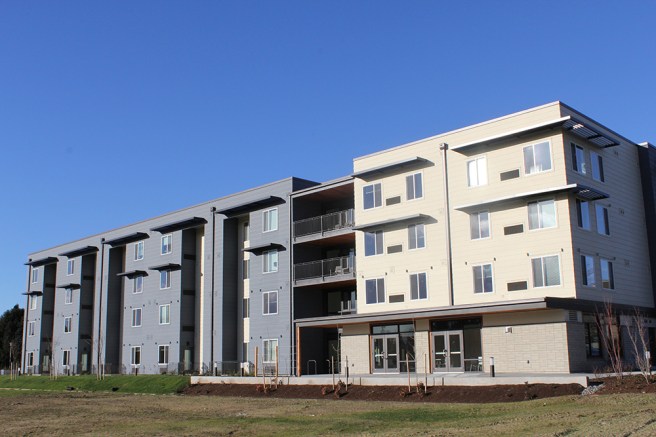
Project Description Spearheaded by REACH, one of the largest and most successful Community Development Corporations in Oregon, Isabella Court offers affordable, senior living in Vancouver, Washington. Isabella includes 46 one-bedroom and 3 two-bedroom apartments and is built to the Evergreen Sustainable Development Standard (ESDS), with its focus on energy efficiency and promotion of sustainable living. The Isabella offers vibrant living in the Fourth Plain Corridor, with nearby restaurants, shopping, movie theater, and parks.
Use of HOME Funds New construction and development costs for multifamily rental housing.
Target Population Apartments are reserved for households 62 years of age and over earning 60% or less of the area median income.
HOME Funds $2,518,734 were provided by the Washington State Department of Commerce, the City of Vancouver and Clark County Community Services.
Other Funds 10 Project-Based Section 8 vouchers valued at $331,200; LIHTC; Tax-exempt bonds; State Housing Trust Fund. Total project cost: $12,476,777.
Project Impact The investment of these HOME funds and other leveraged dollars brought one of the first rent-restricted senior developments to the City of Vancouver in almost ten years and supplied the area economy with construction jobs with a living wage. The affordable housing provided much needed apartments to a City with one of the highest percentage rent increases in the nation between 2015 and 2016. Other impacts of this project include municipal economic development, job skills training, apprenticeship and neighborhood revitalization for one of the poorest Census Tracts in Clark County.
Contact Ben Sturz – bsturtz@reachcdc.org www.reachcdc.org

CDBG Impact Stories in Washington County, Minnesota

During National Community Development Week, NAHRO celebrates the hard work of communities across the country by sharing Community Development Block Grant (CDBG) and HOME Investment Partnerships Program (HOME) impact stories, highlighting the importance of these federal affordable housing and community development programs at the local level.

CDBG is a flexible federal program and Washington County, Minnesota has used CDBG dollars to strengthen their communities through a wide variety of projects:

  • Affordable senior housing so that the elderly population may comfortably age in place;
  • zero percent home improvement loans for families and seniors to fund repairs that these homeowners might not otherwise be able to afford; and
  • an expanded local food bank so that additional fresh produce and meats are available to their growing number of clients.
Project name Piccadilly Square Senior Housing BuildingPiccadilly Square
Location Mahtomedi, Minnesota
District MN-04
Project year 2015
Use of CDBG funds Soil remediation for redevelopment
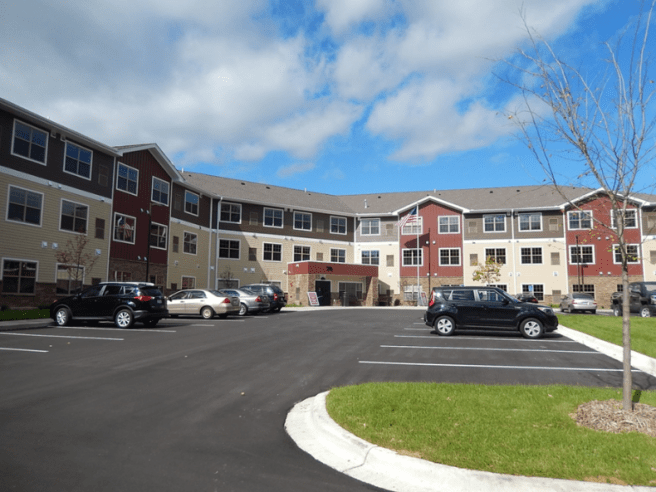
Project Description The Piccadilly Square Senior Housing Building is a 79-unit affordable senior housing development for seniors 62 or older with incomes at or below $35,000. Developed through the joint effort of the Washington County Housing and Redevelopment Authority and a private developer, CDBG funds were used for soil remediation of 3 acres for redevelopment of a former restaurant site at the edge of downtown Mahtomedi.

Piccadilly Square enables seniors to age in place. A senior service coordinator is available to all tenants to proactively problem solve issues affecting seniors ability to live well and safely in their units.  Building design includes: 5 wheelchair accessible units and 9 units with accessible communication features for residents who are deaf or hearing impaired; roll-in showers in all units; ample space in unit and common area spaces for walker/wheelchair mobility; no threshold curb at main entry; and two elevators.

Target population Low-income, elderly
Amount of CDBG funds $352,709
Other project funds; leverage $14,078,516; 1:98. HOME, 4% Low-Income Housing Tax Credit, Tax Exempt bonds, Federal Home Loan Bank Board, Metropolitan Council Livable Community Act funds, and City fee waivers.
Jobs created 28 temporary jobs
Project impact Not only does the apartment complex allow low-income seniors to comfortably age in place (full occupancy of the 79-unit building is expected in summer of 2017), but this project has contributed to the beautification of the downtown area. The restaurant previously located on the site had been shuttered since 2005 and was badly deteriorating. The project called for razing the building and extensive environmental cleanup of the soil. City officials expect Piccadilly Square to “spur things happening in the downtown area.”
Contact Washington County Community Development Agency BDacy@wchra.com
Project name Owner Occupied Rehabilitation Loan ProgramWashington Co Loan Program
Location Throughout Washington County, Minnesota
District MN-02, MN-04, MN-06
Project year Yearly
Use of CDBG funds Homeowner housing rehabilitation
Project description Administered by the Greater Metropolitan Housing Corporation (GMHC), this program offers deferred, 0% interest loans to homeowners in Washington County for home improvements to low-income families or seniors that might not otherwise be able to afford repairs.
Target population Families and the elderly
Amount of CDBG funds $207,000
Project impact 10 to 15 homes a year
Contact www.gmhchousing.org
   
Project name Hugo Good Neighbors Food ShelfHugo Food Shelf
Location Hugo, Minnesota
District MN-04
Project year 2014
Use of CDBG funds Land acquisition for construction so that HGNFS could move into a new and improved space.
Project description Opened in May 2009, the Hugo Good Neighbors Food Shelf (HGNFS) was started by a group of volunteers in response to the needs of their neighbors, whom were struggling to meet their financial obligations and provide food to their families. It was critical to the community that the food shelf conduct itself with a philosophy of operational transparency and as an independent, stand-alone Food Shelf, not affiliated with any other private organization. With this in mind, and with the full support of the City of Hugo, HGNFS was developed as a non-profit 501(c)3 organization. Significant growth of HGNFS over the last seven years spurred the need for a larger space – the previous food shelf had been operating out of a small garage that housed the Hugo Fire Department’s fire truck over 30 years ago and had inadequate heating and cooling and no running water.
Target population Extremely low-income families, seniors, youth, homeless.
Amount of CDBG funds $70,000
Other project funds; leveraging Bank Loan $202,414; 1:4
Project impact In the early days, HGNFS served, on average, served 10 households per month. In 2012, the other food shelf located in the community closed its doors, leaving HGNFS as the sole provider of food shelf service for the growing community. As a result, clients have doubled and they now serve, on average, 125 households per month. Thanks to the CDBG program, the new building has the additional space needed to offer more fresh produce and meats to their clients.
 Contact  www.hugofoodshelf.org
   

HOME Impact Story in Lawrence, Kansas

During National Community Development Week, April 17-22, NAHRO celebrates the hard work of communities across the country by sharing Community Development Block Grant (CDBG) and HOME Investment Partnerships Program (HOME) impact stories, highlighting the importance of these federal affordable housing and community development programs at the local level.

Project name Cedarwood Senior Cottages

A883A166-D713-413C-9F65-616FABCDD0D5

Location and District Lawrence, Kansas (KS-02)
Project Year Construction completed 2015-2016. Leased up by March 2017
Project Description Built by Tenants to Homeowners, Inc. (a nonprofit CHDO) and community partners, Cedarwood is an innovative affordable senior housing complex with 14 individual cottages, including 10 with garages, and a community room in the heart of the property. There are 9 two-bedroom units and 5 one-bedroom units that are fully accessible, Energy-Star 3 certified, and use health and safety smart technology (a smart sensor system can track movement in the home and the community room includes a touch screen kiosk that provide residents with helpful information and resources). All these features are meant to allow seniors to age in place.

Cedarwood meets a local housing need for middle-income seniors who want to remain independent but earn too much to live in a subsidized home and not enough to afford a senior living facility. According to local news coverage of Cedarwood, “[t]he need for affordable senior housing is only likely to increase, with the baby boomer generation reaching retirement age. An estimated 10,000 Americans will turn 65 every day through 2029. Meanwhile, a local retiree attraction task force in 2012 identified affordable senior housing as a need in the community.” Cedarwood can serve as a model for future senior housing projects in the community.

Use of HOME HOME funds were used for construction.
Target Population Elderly (62+), 9 HOME units with 4 targeted at below 50% and 5 targeted below 60%. The remaining 5 units target 60-80% median family income.
HOME Funds $167,000 from City of Lawrence HOME funds and $525,000 from State Kansas HOME funds.
Other Funds $260,000 lot donation (1.3 acres) from Douglas County, Kansas; $100,000 from City of Lawrence fee waivers and in-kind infrastructure; $600,000 CHDO equity from Tenants to Homeowners, Inc.; $420,000 in Federal Home Loan Bank Affordable Housing Program funds; $500,000 construction and permanent loan financing from Truity Credit Union.
Jobs Created $2.3 million project using all local vendors, 3 temporary jobs created for 24 months (Davis Bacon did not apply).
Project Impact Cedarwood currently serves 13 households with 16 seniors and the project has added value to the local Qualified Census Tract. Furthermore, the project puts senior housing in a central location with available public transportation, services, and shopping. Cedarwood also demonstrates how smart technology can be used to help seniors age in place and save the community in unnecessary early assisted care expenses.

The project also improved the use of a vacant infill lot that sits next to a nonprofit incubator building; providing independent living and a senior community within a residential neighborhood that links to senior services that are offered by nonprofits. This allows for intergenerational activities and senior social interaction as well as shared services.

Quote from a beneficiary: “It is been really nice. My dog Daisy is really happy here and we are able to take walks in the neighborhood and stay active.” -Holly Holbert, resident since July 1, 2016.

Contact Rebecca Buford, Executive Director, TTH, Inc. rbufordefird@yahoo.com 785-760-2058

Vera Institute of Justice Offering Technical Assistance for PHAs Implementing Reentry Programs

The Vera Institute of Justice is soliciting applications for technical assistance from PHAs, including those PHAs running Housing Choice Voucher Programs, who seek to implement reentry programs or to change their policies for the purpose of increasing access to housing for people with conviction histories.

PHAs of all sizes and in all geographies are invited to apply. Additionally, PHAs that are in the same geographic area may apply together in a single application, if they have common goals and coordination would facilitate achieving those goals.

The program is offering nine months of technical assistance. Technical assistance includes meeting with PHA staff; meeting with local stakeholders; data analysis identifying the number of potentially barred individuals; policy assistance changing or drafting a PHA’s policy towards individuals with records; access to local consultants; assistance implementing policy change; data analysis after implementation of policy changes; and potential opportunities to foster cross-site learning. PHAs are expected to identify a primary liaison and assist with developing a group of interested community stakeholders. There are no financial commitments for PHAs.

To apply, interested PHAs should send (as a PDF) the following: (1) a letter of intent or commitment; (2) an application narrative; and (3) optional, but recommended, letters of support. All documentation should be sent to kfinley@vera.org.

Applications will be accepted until May 12, 2017. Vera staff will conduct interviews with some applicants and selected sites will be announced in June.

The entire “Request for Proposals for Technical Assistance” can be found here.

Learn more about the Vera Institute of Justice here.


National Community Development Week 2017 — April 17-22: Celebrating the Important Work of CDBG and HOME

NAHRO, along with fellow members of the Community Development Block Grant (CDBG) Coalition, will be celebrating National Community Development Week, April 17-22, 2017. Over the course of this week, communities across the country will celebrate the work of the CDBG Program and the HOME Investment Partnerships (HOME) Program.

The CDBG program provides grants to over 1,200 state and local governments and funds activities such as housing rehabilitation, business assistance, senior services, and infrastructure – to name a few. These activities are primarily targeted to low-income persons and households. Every $1.00 of CDBG leverages another $3.65 in other funding; bringing additional resources to communities that support jobs, businesses and, most importantly, the people who live in these communities.

HOME provides grants to over 600 State and local governments to create safe, decent and affordable housing, both rental and homeowner. HOME is a vital federal housing program that allows communities to leverage $4.20 of public and private dollars for every HOME dollar invested.

CDBG and HOME have been proposed for elimination in the President’s FY 2018 HUD budget and National Community Development Week provides the opportunity for Congressional Members and the community to see first-hand the results of these programs by touring projects, meeting with state and local staff and interacting directly with beneficiaries served by the programs.

NAHRO is urging members a to participate in National Community Development Week by supporting local project tours, issuing proclamations, engaging and educating Congressional Members on the programs, and reaching out to the media to promote the impact of CDBG and HOME. Here’s what you can can do:

Learn

Advocate

  • Contact and engage with your members of Congress to schedule meetings and plan a site visit of a local projects to show how these programs have helped your community. Remember –  Congress is in recess through April 23 and lawmakers will be back in their districts
  • Send letters to your legislators using NAHRO’s pre-drafted Advocacy Action Center letter telling Congress to take action today to finalize FY 2017 spending and pass a full-year Transportation, Housing and Urban Development spending bill.
  • Join over 2,000 local, state and national organizations and sign on to the CDBG support letter seeking $3.3 billion for CDBG in FY 2018. This letter will be sent to Appropriations Committee leaders in May.

Spread the Word

  • Share your impact story by writing and submitting a Letter to the Editor or op-ed to your local newspaper. Make sure to mention your members of Congress so it gets picked up in their daily clips.
  • Join @NAHROnational on Twitter and elevate awareness of the need for – and the impact of – CDBG and HOME through tweets. Make sure to use the following hashtags: #CDBG #CDBGImpact #Fight4CDBG #HOME #HOMEImpact, and to tag your House and Senate representatives.
  • Follow and share the NAHRO Blog where we will post success stories of CDBG and HOME submitted by NAHRO members throughout week.

Connect with NAHRO

  • If your impact story was published in your local newspaper or you meet with your member of Congress, let us know! Please email Jenny Hsu at jhsu@nahro.org with a description of your advocacy efforts so that we can highlight your efforts with Congress once they are back in session.

CDBG Coalition Members: NAHRO, U.S. Conference of Mayors, National Association of Counties, National League of Cities, National Community Development Association, Council of State Community Development Agencies, National Association for County Community and Economic Development, National Association of Development Organizations, American Planning Association, Local Initiatives Support Corporation, Habitat for Humanity International, Feeding America, YWCA USA, Enterprise Community Partners, Rebuilding Together, National Recreation and Park Association, National Association of Regional Councils, National Urban League, International Economic Development Council, Heartland Alliance, The Trust for Public Land, and National Development Council

HOTMA Implementation e-Briefing on April 11

NEXT WEEK!
HOTMA Implementation
A NAHRO Professional Development e-Briefing
Tuesday, April 11, 2017
1:30 – 3:00 pm EDT

On July 29, 2016 President Barack Obama signed into law the Housing Opportunity Through Modernization Act of 2016 (HOTMA), legislation that received unanimous, bipartisan support from Congress.

As HUD has begun the process of implementing the provisions in HOTMA, many local agencies are wondering how they will be impacted. Join National NAHRO’s in-house policy experts as they review the key provisions included in HOTMA, discuss HUD’s implementation notices and timeline, and explain what NAHRO is doing to help HUD move forward with implementation of this critically important reform legislation.

Reminder: Whether you’re watching alone or with an audience of 100, only one registration per connected device is required, making NAHRO Professional Development’s e-Briefings an outstanding value!

Online registration closes Monday, April 10, at 11:59 p.m. EDT.

Senators Reed and Collins Introduce Bill to Strengthen the U.S. Interagency Council on Homelessness

On March 28, Senators Jack Reed (D-RI) and Susan Collins (R-ME) introduced bipartisan legislation (S.743)  to strengthen the United States Interagency Council on Homelessness (the Council). Created by Congress in 1987, the Council is the only federal level agency specifically tasked with coordinating the federal response to homelessness. Since its creation, the body has grown to include 19 Cabinet secretaries and agency heads.

Unfortunately, the Council was last authorized by Public Law 113-325 and sunsets at the end of Fiscal Year (FY) 2017. The Council would have to close its doors on October 1, 2017 and the Reed-Collins bill would eliminate the sunset date so that this agency can continue to build on its success in helping to prevent and end homelessness across the nation.

“The Council works with government, public housing agencies, homeless service providers, and local partners to better align their resources, efforts, goals, and measures of success. The progress we are making is encouraging, but it is not irreversible and now is not the time to end this effective, evidenced-based program that has helped leverage federal investments and measurably reduced homelessness in America,” said Senator Reed. “In our current budgetary environment…[t]he Council is proof that the government can work and save money in the process”

“As the Chairman of the THUD Appropriations Subcommittee, I will continue working to ensure that homeless programs have the data and the resources to reduce and prevent homelessness,” said Senator Collins.

In 2010 the Council unveiled Opening Doors, a federal strategic plan to prevent and end homelessness, through set goals, best practices, and policy priorities. Since then, HUD has reported a 14 percent decrease in overall homelessness in the nation, including a 47 percent decline in veterans’ homelessness.

NAHRO believes that the Council has been instrumental in bringing down homelessness rates and joins a strong and diverse coalition of non-profit and housing organizations in support of the Reed-Collins bill.


NAHRO Releases 2017 Legislative and Regulatory Agenda

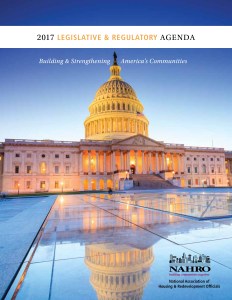
2017 Leg Agenda CoverAs the 2017 Washington Conference begins this week, we are proud to present NAHRO’s 2017 Legislative and Regulatory Agenda.

This year’s agenda builds on our previous Transition 2017, Legislative and Regulatory Year in Review – 2016 documents. It also serves as an extension of our outreach to the new Congress, which introduces NAHRO and its positions. The 2017 Legislative and Regulatory Agenda provides specific priorities and positions that will guide the NAHRO legislative and regulatory roadmap for the coming year.

This agenda is not intended to catalogue all the efforts and policies that NAHRO will actively pursue in 2017. There are many issues — including ones that may rise in priority as federal policymakers act over the course of the year — that will feature prominently in NAHRO’s efforts on behalf of its members and the communities they serve.

Our most vulnerable citizens find a safe harbor and a place to call home in the work of public housing authorities and community development agencies. NAHRO members will continue to meet the challenge of building stronger communities and ensuring that all Americans have a stable, affordable place to call home in which they can live, grow and thrive.

Please read, review, and share NAHRO’s 2017 Legislative and Regulatory Agenda, and feel free to use it to develop and coordinate your agency, local, county, state and regional legislative and regulatory advocacy plans for 2017.

New and updated legislative and regulatory information is available on the Congressional Relations and Policy & Program Development webpages on the NAHRO website and on the NAHRO Blog.