NAHRO Submits Regulatory Reform Comments to HUD

On June 14, NAHRO submitted its comment letter to HUD’s request for comment on Reducing Regulatory Burden; Enforcing the Regulatory Reform Agenda Under Executive Order 13777.

NAHRO identified many regulations that would make good candidates for streamlining. Each of the regulations met at least one of the following reasons for streamlining:

(a) The regulation results “in the elimination of jobs, or inhibits job creation”;

(b) The regulation is “outdated, unnecessary, or ineffective”;

(c) The regulation imposes “costs that exceed benefits”; or

(d) The regulation creates a “serious inconsistency or otherwise interferes with regulatory reform initiatives and policies.”

The regulations listed are non-exhaustive. NAHRO’s comment letter is a start of a conversation between the Department and NAHRO. Given the limited time to compile this list, NAHRO expects to identify additional avenues for further regulatory streamlining, which we will share with the HUD.

NAHRO’s comment letter is organized into three sections: Public Housing and Section 8 recommendations; Community Planning and Development; and recommendations on cross-cutting programs and initiatives. Within each major section are topic headers with NAHRO’s recommendation on each topic.

Deadline Today for HUD’s VAWA 2013 Emergency Transfer Plan Requirements

As NAHRO previously reported, HUD published a final rule last year that provides expanded housing protections for survivors of violence and fully codifies the provisions of the Violence Against Women Reauthorization Act (VAWA) of 2013 into HUD regulations. Most of the final rule’s requirements became effective on December 16, 2016, but covered housing provider are also required to comply with rule’s emergency transfer plan provisions (and be able to begin making transfers) no later than today – June 14, 2017.

Last month, NAHRO policy staff conducted a webinar that discusses compliance with HUD’s final rule and the requirements for completing an emergency transfer plan and providing emergency transfers. This recording is available for purchase online at NAHRO’s Digital Store.

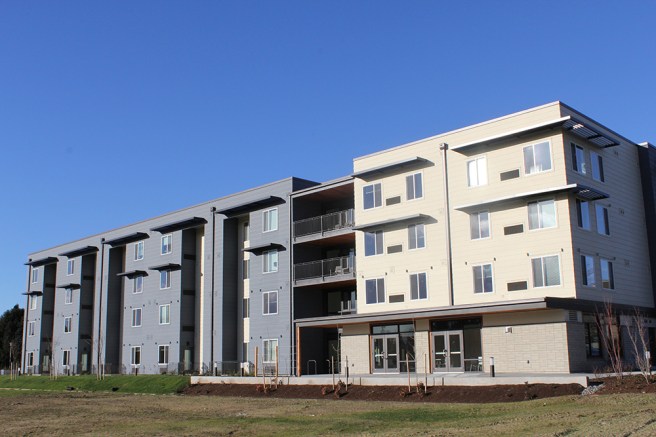
HOME Impact Story in Vancouver, Washington

During National Community Development Week, NAHRO celebrates the hard work of communities across the country by sharing Community Development Block Grant (CDBG) and HOME Investment Partnerships Program (HOME) impact stories, highlighting the importance of these federal affordable housing and community development programs at the local level.

Project name Isabella Court I IMG_3578_Isabella
Location Vancouver, WA
District WA-03
Project Year 2015
Project Description Spearheaded by REACH, one of the largest and most successful Community Development Corporations in Oregon, Isabella Court offers affordable, senior living in Vancouver, Washington. Isabella includes 46 one-bedroom and 3 two-bedroom apartments and is built to the Evergreen Sustainable Development Standard (ESDS), with its focus on energy efficiency and promotion of sustainable living. The Isabella offers vibrant living in the Fourth Plain Corridor, with nearby restaurants, shopping, movie theater, and parks.
Use of HOME Funds New construction and development costs for multifamily rental housing.
Target Population Apartments are reserved for households 62 years of age and over earning 60% or less of the area median income.
HOME Funds $2,518,734 were provided by the Washington State Department of Commerce, the City of Vancouver and Clark County Community Services.
Other Funds 10 Project-Based Section 8 vouchers valued at $331,200; LIHTC; Tax-exempt bonds; State Housing Trust Fund. Total project cost: $12,476,777.
Project Impact The investment of these HOME funds and other leveraged dollars brought one of the first rent-restricted senior developments to the City of Vancouver in almost ten years and supplied the area economy with construction jobs with a living wage. The affordable housing provided much needed apartments to a City with one of the highest percentage rent increases in the nation between 2015 and 2016. Other impacts of this project include municipal economic development, job skills training, apprenticeship and neighborhood revitalization for one of the poorest Census Tracts in Clark County.
Contact Ben Sturz – bsturtz@reachcdc.org www.reachcdc.org

HUD Issues Notice on Temporary Census Income

On March 7, HUD issued a Notice PIH 2017-5, “Income exclusion under temporary Census employment and Census access.” The notice emphasizes the importance of accurate census data to the HUD programs and discusses how PHAs and other certain HUD grantees must handle a family’s temporary census income along with providing census workers access to buildings.

HUD regulations require temporary, sporadic, nonrecurring income not to be included in the family income calculation. The notice states, “Under this exclusion, PHAs exclude temporary income payments from the U.S. Census Bureau, defined as employment lasting no longer than 180 days per year and not culminating in permanent employment.” This provision applies to all PHAs and HUD grantees that calculate family income under 24 CFR 5.609.

This notice also reminds building managers to provide census workers access to properties. Specific mention of providing census workers access to properties with federally assisted tenants is also made in the notice.

2017 Grade-Level Reading Week in Denver, CO

As part of NAHRO’s partnership with the Campaign for Grade-Level Reading (GLR), we encourage NAHRO members to learn about and engage with GLR on opportunities to improve the educational outcomes of the children living in your affordable housing programs. Below is information on the 2017 Grade-Level Reading Week being held in Denver, Colo. This is an excellent chance to interact with local communities and leaders on educational opportunities.

The Campaign for Grade-Level Reading is coming home to Denver in June 2017. In many respects, Denver, Colo., is the birthplace of the GLR Campaign. In June 2012, 14 communities were recognized with the coveted title of All-America City for their focus on grade-level reading. And 124 communities signed on as Charter Members of the GLR Community Network.

Since then, The GLR Network has grown to include over 300 communities in 42 states, the District of Columbia, Puerto Rico and the U.S. Virgin Islands. These local campaigns are supported by 2,300 local organizations and 250+ state and local funders, including 130 United Ways.

From June 13-14, local, state, and national funders that support early literacy will gather for the 2017 Funder Huddle. Attendees will have an opportunity to meet other funders in the grade-level reading community, share challenges and successes, learn from and with each other, and collectively drive toward bigger, stronger and better results.

From June 14-16, hundreds of civic and community leaders, public officials and educators from across the country will come together for the 2017 All-America City Awards, America’s oldest and most prestigious community recognition. Each year, the All-America City Awards are given to communities that exemplify outstanding civic accomplishments. This year, the National Civic League and the Campaign for Grade-Level Reading will recognize communities that have made measurable progress for low-income children on the key drivers of early reading success. REGISTER today!

Regulatory Freeze Memo Issued

On January 20, the Trump Administration issued a “Regulatory Freeze Pending Review” memo that applies to all Federal agencies, including the U.S. Department of Housing and Urban Development (HUD). This memo is similar to memos issued by previous administrations as they come into office, and NAHRO had expected this regulatory freeze.

Generally, the regulatory freeze requires agencies to withdraw any regulations that have not yet been published in the Federal Register and to extend the effective date by 60 days of any regulations that have not become effective as of January 20, 2017. The Director of the Office of Management and Budget (OMB) can issue exceptions to the regulatory freeze in emergency situations and to address urgent health, safety, financial, or national security issues.

The regulatory review not only applies to regulations but also any “guidance document.” A “guidance document” is any substantive action or an agency statement that states a policy on a statutory, regulatory, or technical issue that is normally published in the Federal Register.

NAHRO will continue to monitor the effects of the regulatory freeze and has reached out to HUD staff on how this regulatory freeze will affect specific regulations. As more information becomes, available NAHRO will share it with our members through The NAHRO Blog and the Monitor.

For any specific questions or concerns, please contact Georgi Banna, NAHRO’s Director of Policy and Program Development, at gbanna@nahro.org. As always for the most up-to-date information of the affordable housing and community development regulations and legislation, follow The NAHRO Blog and check the NAHRO website.

NAHRO Provides Recommendations to the HUD 2017 Transition Team

Today NAHRO provided members of President-elect Trump’s HUD transition team with the NAHRO Transition 2017 recommendations. All recommendations and positions in this document have been previously approved by our standing committees and the NAHRO Board of Governors. We also intend to make ourselves available to the new transition team and supply them with any and all information and assistance they may require from us to make the transition at HUD under the Trump Administration as smooth as possible.

The transition recommendations can be used as you reach out to your local HUD officials, your elected officials who will be seated in the new Congress, the media and your own state and local officials in a united effort to move a responsible and responsive housing agenda forward at HUD and on Capitol Hill. In addition to this document, the association will also be producing the NAHRO 2017 Regulatory and Legislative Agenda, which will be drafted over the coming weeks with input from NAHRO membership and leadership and will be available at the NAHRO 2017 Washington Conference.

NAHRO’s Transition 2017 recommendations for HUD may be viewed here.

NAHRO Presents at HUD on the Lead Safe Housing Proposed Rule

On October 6, NAHRO participated in a HUD organized convening on the proposed Lead Safe Housing Rule. NAHRO’s Director of Policy and Program Development, Georgi Banna, along with the National Center for Healthy Housing’s Chief Scientist, Dr. David E. Jacobs and the Green and Healthy Homes Initiative’s Executive Director, Ruth Ann Norton were on a panel moderated by HUD-PIH’s Principal Deputy Assistant Secretary Lourdes Castro Ramirez that discussed the need to combat lead poisoning in children and the role of housing in that battle.ghhi-lead-2016-10-06_16-49-58_000

A video of the Lead Safe Housing Rule Convening has been posted on HUD’s YouTube Channel. Clicking Georgi Banna will begin at NAHRO’s statement.

Comments on HUD’s proposed Lead Safe Housing Rule are due to HUD on Monday, October 31, 2016. NAHRO submitted its comments this week. More information on the HUD’s Lead Safe Housing Rule and NAHRO thoughts and comments on it can be found in the current edition of the NAHRO Monitor.