President Signs $2T COVID-19 Relief Bill


The third coronavirus (COVID-19) relief bill has passed the Senate and the House, been signed by the President, and is now law. The entire bill includes more than $2 trillion to help the United States economy.

Thank you to everyone that contacted your legislators through the NAHRO’s Advocacy Action Center. Your messages of how important affordable housing is during a pandemic played a critical role in the HUD programs receiving supplemental, relief funding. NAHRO is providing additional coronavirus resources at www.nahro.org/coronavirus.

The relief bill includes additional funds for HUD’s Public and Indian Housing (PIH), Community Planning and Development (CPD), and Office of Housing programs. The HUD funding in the bill is in line with the previously discussed Senate bill – except for the Community Development Block Grant (CDBG) funding, which is $5 billion in the relief bill. All the funding in the bill is in addition to the previously appropriated FY2020 funding. The chart below provides the amounts of the supplemental funding for select HUD programs from the relief bill.

Relief Bill HUD Funding

Program

Relief Bill

Tenant-Based Rental Assistance

$1.25 Billion

HAP Adjustments (included above)

$400 Million

Admin Fee (included above)

$850 Million

Public Housing Op Fund

$685 Million

Native Housing Programs

$300 Million

HOPWA

$65 Million

202 – Elderly

$50 Million

811 – Disabled

$15 Million

CDBG

$5 Billion

Homeless Assistance Grants

$4 Billion

Project-Based Rental Assistance

$1 Billion

In addition to the supplemental funding the relief bill includes several policy provisions including limited statutory and regulatory waivers. HUD is expected to issue notices soon that provide the allocation of the supplemental funding and implements the policy provisions and program waivers, as many of the provision dates are tied to the date of enactment, March 27, 2020. The program policy provisions, along with the funding for each, are described below.

Temporary Moratorium on Eviction Filings

The relief bill includes a provision that requires PHAs to implement a temporary moratorium on evictions. The moratorium applies to Public Housing, Housing Choice Vouchers, Low-Income Housing Tax Credit units, rural housing assistance, and other programs as defined by the Violence Against Women Act. The eviction moratorium will last for 120 days from the enactment of the relief bill, July 25, 2020. The PHA will not be allowed to file an eviction action for nonpayment of rent, fees, or charges and no late fees or penalties may be charged. A 30-day notice to vacate for nonpayment of rent cannot be issued until the expiration of the eviction moratorium. In practice, nonpayment of rent eviction hearings cannot be heard for 5 months from the enactment of the relief bill, August 24, 2020. The moratorium only addresses eviction for non-payment of rent evictions and does not address any other type of eviction. Evictions for issues such as criminal activity or safety of residents are, therefore, allowed.

Tenant-Based Rental Assistance (TBRA)

The relief bill provides $1.25 billion for tenant-based rental assistance.

Administrative Expenses – Of the relief bill’s $1.25 billion for the TBRA account, there is $850 million for additional administrative and other expenses PHAs encounter in administering Section 8 programs, including mainstream vouchers, in response to coronavirus. The bill states that these expenses shall be new eligible activities to be defined by HUD and shall be activities to “support or maintain the health and safety of assisted individuals and families and costs related to retention and support of current participating landlords.” Funds from the FY 2020 appropriations bill may also be used for these expenses.

Housing Assistance Payments (HAP) Adjustments – Of the relief bill’s $1.25 billion for the TBRA account, $400 million will be available for “adjustments in the calendar year 2020 Section 8 renewal funding allocations, including Mainstream vouchers.” These adjustments will be for those PHAs that “experience a significant increase in voucher per-unit costs due to extraordinary circumstances or that, despite taking reasonable cost savings measures,” as determined by HUD, would be forced to terminate voucher assistance.

Need-based allocation – The Department is instructed to allocate the above funding based on need as determined by HUD.

Section 811 – The relief bill allows for any amounts unobligated, including administrative expenses, that remain available after funding renewals and administrative expenses to be used for non-competitive section 811 tenant-based rental assistance to prevent, prepare for, and respond to coronavirus. HUD will award no less than 25 percent of the remaining amounts proportionately to PHAs who received awards in the 2017 and 2019 competitions within 60 days of enactment, May 26, 2020.

Family Unification Program (FUP) vouchers – Funds from tenant-protection vouchers used for youth in the FUP program and funds from FUP funding reserved for youths will not have to be reported to the appropriate congressional committees when grants are awarded.

Waivers – The relief bill allows that the Department may “waive, or specify alternative requirements for, any provision of any statute or regulation [except for requirements related to fair housing, nondiscrimination, labor standards, and the environment] that [HUD] administers in connection with the use of the amounts made available” in this bill or the FY 2020 appropriations act, upon a finding by HUD that waivers “are necessary for the safe and effective administration of these funds to prevent, prepare for, and respond to coronavirus.”

Notice of waivers – HUD must notify the public through the Federal Register or “other appropriate means to ensure the most expeditious allocation of this funding” of waivers or alternative requirements. A public notice at the appropriate government website or through other electronic media determined by HUD may suffice.

Length of waivers – Waivers or alternative requirements will remain in effect for the time and duration specified by HUD by public notice and may be extended by HUD.

Project-Based Rental Assistance

Project-based rental assistance – The relief bill provides $1 billion for project-based rental assistance. These funds are to “prevent, prepare for, and respond to coronavirus,” including funds to maintain normal operation and take other necessary actions, while the program is impacted by coronavirus. The funding is also for owners and sponsors of properties receiving project-based assistance.

Waivers – The Department may “waive, or specify alternative requirements for, any provision of any statute or regulation [except for requirements related to fair housing, nondiscrimination, labor standards, and the environment] that [HUD] administers in connection with the use of the amounts made available” in this bill, upon a finding by HUD that waivers are necessary “to expedite or facilitate the use of such amounts to prevent, prepare for, and respond to coronavirus” and the waivers are consistent with program purposes.

Notice of waivers – HUD must notify the public through the Federal Register or other appropriate means. At a minimum on the Internet at the appropriate government website or through other electronic media decided by HUD.

Public Housing

Public Housing Operating Fund – The relief bill provides $685 million to the Operating Fund. These funds would be distributed by the Operating Fund formula.

Public Housing Subsidy Flexibility The relief bill allows PHAs fungibility of their Operating and Capital Funds so long as the funds are used to prevent, prepare for, and respond to coronavirus. This includes Operating and Capital Funds appropriated to PHAs prior to these bills. The ability to transfer funds between the Operating and Capital accounts will remain available through December 31, 2020. HUD can extend this provision in 12-month increments if needed.

WaiversThe relief bill allows HUD to provide waivers for statutory and regulatory requirements related to the Capital and Operating Fund if those waivers would help PHAs prepare for, prevent, and respond to coronavirus. These waivers will be released in the Federal Register. 

Community Development Programs

HOPWAThe relief bill provides $65 million to HOPWA – $50 million to be distributed by formula and $10 million by one-time, non-renewable grants to existing contracts for permanent support housing that were initially made in FY 2010 and prior years.

The bill allows these funds to be used to help individuals living with HIV-AIDS relocate for the purposes of self-isolation, quarantine, or provide other coronavirus control services as recommended by the CDC.

Community Development Block Grant The Community Development Fund receives $5 billion to be distributed as Community Development Block Grants (CDBG). Of this funding, $2 billion will be distributed to entitlement communities by formula and $1 billion will go directly to states to prepare for and respond to coronavirus based on need. The need-based formula will consider public health needs, the number of COVID-19 cases compared to the national average, and economic and housing disruptions. Allocations must be made within 45 days of enactment of the relief bill, May 11, 2020. HUD would have the discretion to distribute the remaining funds to states or local governments.

The relief bill allows entities an expedited procedure to amend their statements of activities to engage in coronavirus activities. In-person meetings are not required however entities must provide notice a comment period of no less than 5 days to receive public input. Virtual meetings are also allowed.

Homeless Assistance Grants The relief bill provides $4 billion for the Emergency Solutions Grants (ESG) program. Of this, $2 billion will be distributed as formula grants and $2 billion will be distributed to states by a formula developed by HUD. The formula would consider risk of transmission of coronavirus, rising rate of sheltered and unsheltered homeless individuals, disruptions to economic and housing markets, and other factors.

The relief bill allows funding to be used for temporary emergency shelters, costs related to infectious disease prevention, and hazard pay. The Secretary may waive statutory and regulatory waivers as needed to prepare for, prevent, and respond to coronavirus. Up to one percent of the funds can be used to increase prior technical assistance awards that relate to providing health care services. Ten percent of the funds received by grantees can be used for administrative purposes. None of the funds provided can be used to require homeless individuals to enter treatment or perform any other prerequisite activity as a condition or receiving shelter, housing, or other services.

Policy and Legislative Contact Information

Georgi Banna, Esq.

Director of Policy & Program Development

GBanna@nahro.org

Tess Hembree

Director of Congressional Relations

THembree@nahro.org


Join Us for a NAHRO Virtual Convening on Monday!

Convening

Despite the challenges posed by COVID-19, NAHRO remains committed to connecting you with industry leaders and important perspectives. In lieu of our cancelled Washington Conference, we’re thrilled to invite you to a virtual convening on Monday, March 30, from 12:30 p.m. – 2:30 p.m. eastern time with two very special guests:

Dr. Raphael Bostic, the President of the Federal Reserve Bank of Atlanta, will give a presentation on Inclusive Economic Development: Lessons and Challenges, and take questions from attendees; and

Dr. Mark Calabria, Director of the Federal Housing Finance Agency, will discuss FHFA’s mission, its role in the housing sector, and his thoughts on critical milestones ahead.

This virtual convening is a complimentary benefit for NAHRO members, and reasonably priced for non-members. We look forward to connecting with you! 

Register Now Button

HUD Creates Online Guidance Portal

Tomorrow, HUD will publish a notice in the Federal Register announcing the creation of a HUD guidance portal. In the process of complying with a presidential executive order, the Department conducted a review of all of its guidance and ensured that those documents that remain in effect were linked to a single website that could be searched. The single searchable database containing all of HUD’s guidance can be found at: http://www.hud.gov/guidance.

The National Association of Housing and Redevelopment Officials applauds HUD for creating this searchable index and looks forward to further refinements.

The pre-publication copy of the notice announcing this portal can be found here.

HUD Defines “Small Rural PHAs” and Implements parts of Small PHA Section of the Housing Act of 1937

Tomorrow HUD will publish in the Federal RegisterEconomic Growth, Regulatory Relief, and Consumer Protection Act: Initial Guidance on Property Inspections and Environmental Reviews.” The act referred to in the notice is commonly call by its Senate bill number, S. 2155 and S. 2155 will be used in this post to refer to the act. NAHRO worked very closely with Congress to ensure S. 2155 provided statutory and regulatory relief to small PHAs across the country. Additionally, NAHRO also submitted comments to help guide HUD in the implementation of the provisions, many of which HUD incorporated into this notice. NAHRO is thrilled to see the critical provisions of S. 2155 being implemented!

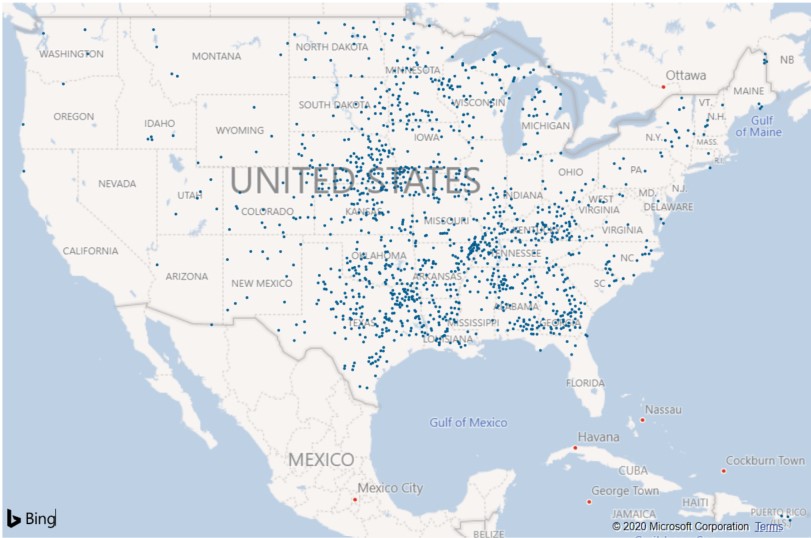
The notice also resolves a key sticking point in the implementation of S. 2155 – what is a small rural PHA? HUD defines “small rural PHA” as a PHA that operates 550 or fewer combined Public Housing and Housing Choice Voucher units and predominantly operates in a rural area. The notice takes NAHRO’s suggestions to exclude Project-Based Rental Assistance (PBRA) units in determining unit count. The notice also draws heavily on NAHRO’s comments on how to define “predominantly operates,” taking two out of three of NAHRO’s suggestions on the definition. “Predominantly operates in a rural area” is defined as having a primary administrative building with a physical address in a rural area OR more than 50 percent of its combined Public Housing units and voucher units under Section 8(o) are in a rural area. Rural area is defined by a Consumer Financial Protection Bureau regulation. Currently there are 1,519 PHAs that qualify as a “small rural PHA” under this definitions and HUD has published a list of small rural PHAs (scroll to bottom on HUD link page).

Small Rural PHA Map - 2-26-2020
Map of Small Rural PHAs

The notice also implements potions of the property inspection and environmental review provisions of S. 2155.

Small rural PHAs that operate the Housing Choice Voucher programs can now inspect their tenant-based and project-based vouchers units every three (3) years. This new inspection schedule will begin for the small rural PHA after its next currently schedule inspection. Small rural PHAs must continue to conduct any lead safety inspection that are required under the Lead-Based Paint Poisoning Prevention Act.

Small rural PHAs will now be exempt from Environmental Reviews with respect to development or modernization projects that cost no more than $100,000. This exemption applies to any section 9(d) Capital Fund, section 9(e) Operating Fund, or section 8(o)(13) Project Based Voucher (PBV) eligible work activity by a small rural PHA at a project site with a project cost of $100,000 or less. For project with a cost of more the $100,000, the small rural PHA must complete the appropriate Environmental Review but HUD will use the rulemaking process to proposed streamlined Environmental Reviews.

NAHRO will continue to work with HUD to ensure full implementation of S. 2155, Economic Growth, Regulatory Relief, and Consumer Protection Act.

NAHRO’s comments can be found here.

The notice can be found here.

The list of small rural PHA can be found here.

Supreme Court Allows Implementation of Public Charge Rule

The United States Supreme Court permitted the Department of Homeland Security (DHS) to make effective the administration’s public charge rule. The rule had been blocked from taking effect by a federal judge in New York. The Supreme Court allows it to be implemented in most of the country—except Illinois where it is still blocked. The rule states that any individual seeking a green card to become a lawful permanent resident (and individuals within the United States who hold non-immigrant visas and wish to extend their stay in the same non-immigrant classification or change their status to a different non-immigrant classification) is inadmissible if they are likely to become a public charge.

The rule defines a “public charge” based on the receipt of financial support from the general public through government funding, including federal rental assistance. The individual would need to receive one or more designated public benefits, including but not limited to federal rental assistance, for more than 12 months in the aggregate within any 36-month period to meet the threshold.

The Department of Homeland Security is not imposing any requirements on benefit-granting agencies through this final rule or a requirement that these agencies specifically verify information individuals submit to U.S. Citizenship and Immigration Services (USCIS). This rule does not change any of the Public Housing, HCV, or PBRA program requirements. The Department of Homeland Security plans to enter into information-sharing agreements with specific agencies (e.g., the Department of Housing and Urban Development) to obtain verification of the information supplied by applicants. Any information sharing will depend on the ability of the relevant agencies to share such information with DHS.

The final rule can be found here.

The Supreme Court’s opinion can be found here.

NAHRO’s one-page guidance on the Public Charge rule can be found here.

Complimentary Webinar!! 2020 Census & PHAs – October 1, 2pm EDT

On Tuesday, October 1, at 2pm eastern time, NAHRO will be hosting a complimentary webinar in preparation for the 2020 Census. Below is information on the session and the registration link. This session is for agencies of all sizes from the smallest to the largest and will discuss the 2020 Census and the interaction between Census and PHAs including first-hand PHA experiences.

2020 Census Key Partnership – Public Housing Authorities

The 2020 Census is right around the corner. The U.S. Census Bureau and Public Housing Authorities are working together to make sure every person will be counted. During this webinar you will hear from Carol Gore of the Cook Inlet (Alaska) Housing Authority and John Mahon of the Bayonne (New Jersey) Housing Authority. Carol and John will share their experiences working with the U.S. Census Bureau in addition to employment opportunities for PHA residents. Join us and bring all your 2020 Census questions!

Please register for 2020 Census Key Partnership – Public Housing Authorities on Oct 1, 2019 2:00 PM EDT at:

 https://attendee.gotowebinar.com/register/7438435157680047371?source=blog

After registering, you will receive a confirmation email containing information about joining the webinar.

Complimentary Webinar!! Fair Market Rent Appeals – August 27, 2pm EDT

On Tuesday, August 27, at 2pm eastern time, NAHRO will be hosting a complimentary webinar in preparation for the release of the 2020 Fair Market Rents and the appeal process. Below is information on the session and the registration link. This session is for agencies of all sizes from the smallest to the largest and will discuss HUD’s process, the options and first-hand PHA experiences.

Using Research Surveys to Raise Your FMR

Do the Fair Market Rents (FMRs) in your area match on-the-ground rental prices that your voucher applicants encounter? If they do not, then this webinar will show you how to increase your FMRs. You will learn about two methods to conduct research surveys. This research survey data can be submitted to HUD to show that on-the-ground rental prices exceed the FMR, allowing HUD to increase the FMR to match the actual rental prices in your area. Bring your questions and comments and prepare your PHA for the 2020 FMRs to be released in a few weeks!

Please register for Using Research Surveys to Raise Your FMR on Aug 27, 2019 2:00 PM EDT at:

https://attendee.gotowebinar.com/register/773057130839951117?source=blog

After registering, you will receive a confirmation email containing information about joining the webinar.

“Housing Search and Leasing” Chapter of HUD HCV Guidebook Published

The Department has published another chapter of the HCV Guidebook. The new chapter is titled “Housing Search and Leasing.”

The National Association of Housing and Redevelopment Officials remains pleased that–at our urging–HUD is updating their guidebooks. We look forward to the completed, and regularly maintained, guidebook.

The new chapter can be found here.

The full guidebook can be found here.

Celebrate Year 1 of the PH Smoke-Free Rule – Complimentary Webinar – July 18 @ 12:30pm ET

Join Clean Air For All, a joint effort between NAR-SAAH, NAHRO, and Live Smoke Free on Thursday, July 18 at 12:30pm eastern time, for a live discussion and Q&A on the “Instituting Smoke-Free Public Housing” final HUD rule. Participants will hear a brief update on the rule and will be able to submit questions to NAR-SAAH, NAHRO, and Live Smoke Free staff. Have your questions about the rule, cessation resources, and enforcement answered. These calls are intended for those working and living in affordable housing. Everyone is welcome to attend all of the calls and hear the various perspectives.

Registration for the webinar can be done at https://attendee.gotowebinar.com/register/6659582895810385675?source=NAHRO.

This month’s Connect Call is all about the anniversary of HUD’s smoke-free rule. We will discuss what is going well in smoke-free public housing and challenges PHAs face maintaining smoke-free policies. Participants will hear about ways to celebrate their PHA’s smoke-free policy, success stories, and how to find resources to improve compliance and enforcement.

At the end of the Connect Call, Clean Air for All will raffle off a Smoke-Free Public Housing Party in a Box to one lucky participant. The box contains everything a PHA needs to throw a smoke-free celebration for approximately 30 residents.

Smoke-Free Public Housing Party in a Box includes:
• Streamers, balloons, and 6 table covers
• 6 table tent decorations
• 30 magnetic clip giveaways
• Educational literature for residents
• Smoke-free housing bingo card game
• Gift certificate for 1 sheet cake from local bakery

Registration for the webinar can be done at https://attendee.gotowebinar.com/register/6659582895810385675?source=NAHRO

Presenters Updated! Tomorrow!! Complimentary PH Unit Preservation Webinar – July 2, 1pm ET

LAST CHANCE TO REGISTER. NAHRO is hosting a complimentary Public Housing Unit Preservation Webinar tomorrow, Tuesday, July 2, at 1pm eastern time. Join Andy Rodriguez, Executive Director of the Nampa (ID) Housing Authority; Edward Mayer, Executive Director of the Housing Authority of the County of Butte (CA); and Georgi Banna, NAHRO’s Director of Policy and Program Development who will share and overview of the preservation options and will their experiences and decision making process in preserving their Public Housing units.

This session is for agencies of all sizes from the smallest to the largest and will discuss HUD’s outreach, the options and first-hand PHA experiences. Below is information on the session and the registration link.

Public Housing Preservation Options – The PHA Perspective

Has HUD reached out to your agency to discuss the future of your public housing? Join us for this complimentary session to review your options, and the NAHRO Policy team is here to provide more information and help sort through a lot of the chatter. Are you interested in joining the Rental Assistance Demonstration (RAD), using the Section 18 Demolition/Disposition program, removing your Declaration of Trust, participating in a streamlined voluntary conversion process, or continuing in public housing? We’ll provide overviews of the options available to PHAs of all sizes and discuss HUD’s plans for the future. We will also be joined by Andy Rodriguez of the Nampa (ID) Housing Authority and Edward Mayer of the Housing Authority of the County of Butte (CA), who will share their experiences and decision making process in preserving their Public Housing.

Please register for Public Housing Preservation Options – The PHA Perspective on Jul 2, 2019 1:00 PM EDT at:

https://attendee.gotowebinar.com/register/4425060811873671691?source=blog2

After registering, you will receive a confirmation email containing information about joining the webinar.