CDBG Impact Stories in Washington County, Minnesota

During National Community Development Week, NAHRO celebrates the hard work of communities across the country by sharing Community Development Block Grant (CDBG) and HOME Investment Partnerships Program (HOME) impact stories, highlighting the importance of these federal affordable housing and community development programs at the local level.

CDBG is a flexible federal program and Washington County, Minnesota has used CDBG dollars to strengthen their communities through a wide variety of projects:

  • Affordable senior housing so that the elderly population may comfortably age in place;
  • zero percent home improvement loans for families and seniors to fund repairs that these homeowners might not otherwise be able to afford; and
  • an expanded local food bank so that additional fresh produce and meats are available to their growing number of clients.
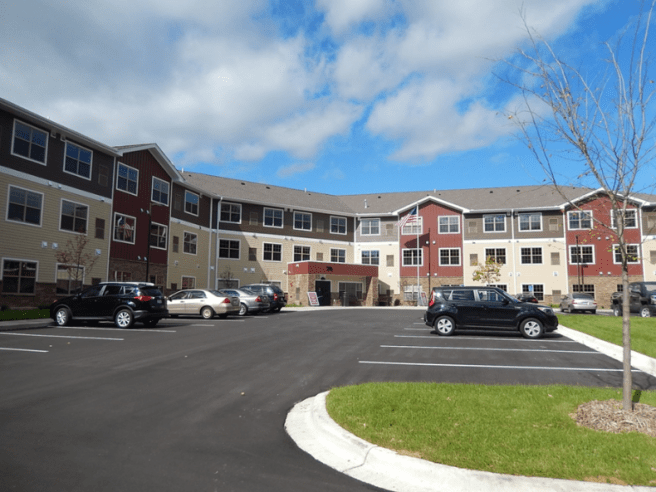
Project name Piccadilly Square Senior Housing BuildingPiccadilly Square
Location Mahtomedi, Minnesota
District MN-04
Project year 2015
Use of CDBG funds Soil remediation for redevelopment
Project Description The Piccadilly Square Senior Housing Building is a 79-unit affordable senior housing development for seniors 62 or older with incomes at or below $35,000. Developed through the joint effort of the Washington County Housing and Redevelopment Authority and a private developer, CDBG funds were used for soil remediation of 3 acres for redevelopment of a former restaurant site at the edge of downtown Mahtomedi.

Piccadilly Square enables seniors to age in place. A senior service coordinator is available to all tenants to proactively problem solve issues affecting seniors ability to live well and safely in their units.  Building design includes: 5 wheelchair accessible units and 9 units with accessible communication features for residents who are deaf or hearing impaired; roll-in showers in all units; ample space in unit and common area spaces for walker/wheelchair mobility; no threshold curb at main entry; and two elevators.

Target population Low-income, elderly
Amount of CDBG funds $352,709
Other project funds; leverage $14,078,516; 1:98. HOME, 4% Low-Income Housing Tax Credit, Tax Exempt bonds, Federal Home Loan Bank Board, Metropolitan Council Livable Community Act funds, and City fee waivers.
Jobs created 28 temporary jobs
Project impact Not only does the apartment complex allow low-income seniors to comfortably age in place (full occupancy of the 79-unit building is expected in summer of 2017), but this project has contributed to the beautification of the downtown area. The restaurant previously located on the site had been shuttered since 2005 and was badly deteriorating. The project called for razing the building and extensive environmental cleanup of the soil. City officials expect Piccadilly Square to “spur things happening in the downtown area.”
Contact Washington County Community Development Agency BDacy@wchra.com
Project name Owner Occupied Rehabilitation Loan ProgramWashington Co Loan Program
Location Throughout Washington County, Minnesota
District MN-02, MN-04, MN-06
Project year Yearly
Use of CDBG funds Homeowner housing rehabilitation
Project description Administered by the Greater Metropolitan Housing Corporation (GMHC), this program offers deferred, 0% interest loans to homeowners in Washington County for home improvements to low-income families or seniors that might not otherwise be able to afford repairs.
Target population Families and the elderly
Amount of CDBG funds $207,000
Project impact 10 to 15 homes a year
Contact www.gmhchousing.org
   
Project name Hugo Good Neighbors Food ShelfHugo Food Shelf
Location Hugo, Minnesota
District MN-04
Project year 2014
Use of CDBG funds Land acquisition for construction so that HGNFS could move into a new and improved space.
Project description Opened in May 2009, the Hugo Good Neighbors Food Shelf (HGNFS) was started by a group of volunteers in response to the needs of their neighbors, whom were struggling to meet their financial obligations and provide food to their families. It was critical to the community that the food shelf conduct itself with a philosophy of operational transparency and as an independent, stand-alone Food Shelf, not affiliated with any other private organization. With this in mind, and with the full support of the City of Hugo, HGNFS was developed as a non-profit 501(c)3 organization. Significant growth of HGNFS over the last seven years spurred the need for a larger space – the previous food shelf had been operating out of a small garage that housed the Hugo Fire Department’s fire truck over 30 years ago and had inadequate heating and cooling and no running water.
Target population Extremely low-income families, seniors, youth, homeless.
Amount of CDBG funds $70,000
Other project funds; leveraging Bank Loan $202,414; 1:4
Project impact In the early days, HGNFS served, on average, served 10 households per month. In 2012, the other food shelf located in the community closed its doors, leaving HGNFS as the sole provider of food shelf service for the growing community. As a result, clients have doubled and they now serve, on average, 125 households per month. Thanks to the CDBG program, the new building has the additional space needed to offer more fresh produce and meats to their clients.
 Contact  www.hugofoodshelf.org
   

TPV Funding for FY 2016 Announced

Today, HUD published a list of funding awards for Tenant Protection Vouchers (TPVs) for FY 2016. These vouchers are funded non-competitively on an as-needed basis. They are funded on a first-come, first-serve basis for households that are displaced due to HUD program actions.

TPVS were awarded for the following actions:

  1. to assist families living in HUD-owned properties that are being sold;
  2. to assist families affected by the expiration or termination of their Project-based Section 8 and Moderate Rehabilitation contracts;
  3. to assist families in properties where the owner has prepaid the HUD mortgage;
  4. to assist families in projects where the Rental Supplement and Rental Assistance Payments contracts are expiring (RAD—Second Component);
  5. to provide relocation housing assistance in connection with the demolition of public housing;
  6. to provide replacement housing assistance for single room occupancy (SRO) units that fail housing quality standards (HQS);
  7. to assist families in public housing developments that are scheduled for demolition in connection with a HUD-approved HOPE VI revitalization or demolition grant; and (8) to assist families consistent with PIH Notice 2016-12, “Funding Availability for Tenant-Protection Vouchers for Certain At-Risk Households in Low-Vacancy Areas—Fiscal Year 2016” and PIH Notice 2015-07, “Funding Availability for Tenant-Protection Vouchers for Certain At-Risk Households in Low-Vacancy Areas—Fiscal Year 2015.”

In total, HUD awarded $86,970,667 for 9,606 housing choice vouchers. The notice lists the awardees alphabetically by state.

The full notice can be read here.

HUD Publishes PIH Notice on Limiting Payments to Influence Federal Transactions, Anti-Lobbying, and Disclosure Requirements

On March 3, HUD published PIH-2017-04 (HA) titled “Limitations on Payments to Influence Federal Transactions for PIH Programs and PHA Anti-Lobbying Certification and Disclosure Requirements.” According to this notice, PHAs are required to submit the following, if they have received over $100,000 in federally appropriated funds:

  • Certification of Payments to Influence Federal Transactions (Form HUD-50071) – for PHAs to certify that they have not and will not make prohibited payments from federally appropriated funds; and
  • Disclosure of Lobbying Activities (SF-LLL) – for PHAs that have used non-federally appropriated funds for influencing or attempting to influence executive or legislative branch personnel in connection with new funding, renewal funding, changing policy, or changing legislation.

PHAs are prohibited from using federally appropriated funds for lobbying activities. PHAs’ contributions to trade associations are not lobbying activities under this notice, nor do the certification and disclosure requirements in this notice apply to PHA contributions to trade associations. The requirements of this notice apply to all PHAs, including MTW agencies.

The notice also outlines record retention and other responsibilities of both PHAs and HUD Field Offices.

Additional information on the notice will be provided to NAHRO members in upcoming coverage.

The full notice can be found here.

Senate Confirms Dr. Ben Carson as HUD Secretary

Earlier today, the United States Senate confirmed Dr. Ben Carson as the 17th Secretary of the United States Department of Housing and Urban Development. He was confirmed on a vote of 58 to 41. NAHRO has invited Secretary Carson to speak at the 2017 NAHRO Washington Conference. NAHRO has also invited the Secretary to listen to the concerns of PHAs and RDAs as part of the countrywide listening tour he mentioned during his confirmation hearing. We look forward to working with him.

[3/3/17 Edit – HUD’s press release can be found here.]

Upcoming NAHRO e-Briefing on HUD Year in Review


On February 7, 2017, img_0015NAHRO will present, Moving Forward: A Review of 2016 Regulation and
Legislation
, part of NAHRO’s Housing Rules!! series.

The NAHRO Policy team will discuss
many areas that HUD and Congress addressed during 2016 and NAHRO reviewed in detail
in NAHRO’s Regulatory and Legislative Year in Review – 2016, which will provide a solid regulatory and legislative foundation as we work with the new Administration and new Congress to keep our affordable housing agenda moving forward.

Registration information for this e-Briefing and other professional development offerings is available through the NAHRO Professional Development calendar.

NAHRO’s Call for Session Proposals for the 2017 Summer Conference is Now Open.

2017-sc-banner-600x100

NAHRO’s Call for Session Proposals for the 2017 Summer Conference is now open.

Share your experience as a housing and community development professional by submitting a session proposal for consideration as a presentation at the 2017 NAHRO Summer Conference in Indianapolis, IN. We are looking for sessions on current and emerging issues, best practices, and strategies to handle challenges facing the industry.

Session proposals should fall under one of the following identified topic tracks – Public Housing, Section 8/HCV, H/CD Finance, Community Development, Commissioners, Organizational Management and International.

Deadline to submit: March 15 and proposals must be submitted thru NAHRO’s on-line submission tool.

Submissions should be complete with a clear and concise session title, description, three learning objectives and identified panelists.

Tomorrow: NAHRO e-Briefing – This Just In From Washington

pd-logo-2016Tomorrow NAHRO will present This Just in from Washington. It’s a new era in Washington; a new Congress and a new Administration will have major impacts on housing and community development programs. Join NAHRO’s Congressional Relations team for an interactive session that will help you navigate the new Congress and its relationship with the new Administration.  John Bohm and Tess Hembree will give you an update on FY2017 appropriations, preview FY2018, outline potential legislative action on HCD programs, and discuss ways in which you can be the most effective advocate in this rapidly changing political climate.

Registration information for this e-Briefing is available through the NAHRO Professional Development calendar.

NAHRO Releases Regulatory and Legislative Year in Review – 2016

In 2016, the Department of Housing and Urban Development (HUD) was very busy setting forth new rules and regulations and providing updated notices and guidances on many of the HUD administered affordable housing programs. The year has also been marked by many legislative victories and a few challenges.

img_0015NAHRO has drafted and compiled this Regulatory and Legislative Year in Review – 2016 to provide a primer of the topics on the forefront of the affordable housing industry. It can also provide you, your public housing agencies (PHAs) and local redevelopment agencies (LRAs) and your stakeholders with current information on many of the programs used and administered by HUD and the affordable housing community.

The full Regulatory and Legislative Year in Review – 2016, along with the individual topic one-pagers, is available on the NAHRO website. For the most up-to-date versions and information visit the NAHRO website and the NAHRO blog.

NAHRO Policy and Congressional teams are also conducting two e-Briefings through NAHRO Professional Development. The first is This Just in from Washington on January 31, 2017, where NAHRO’s Congressional team will give you an update on FY2017 appropriations, preview FY2018, outline potential legislative action on HCD programs, and discuss ways in which you can be the most effective advocate in this rapidly changing political climate. The second is part of the Housing Rules! Series, Moving Forward: A Review of 2016 Regulation and Legislation on February 7, 2017, where NAHRO’s Policy team will discuss many areas that HUD and Congress addressed during 2016 and NAHRO reviewed in detail in NAHRO’s Regulatory and Legislative Year in Review – 2016, which will provide a solid regulatory and legislative foundation as we work with the new Administration and new Congress to keep our affordable housing agenda moving forward. Registration information for both of these e-Briefings is available through the NAHRO Professional Development calendar.

NAHRO Provides Recommendations to the HUD 2017 Transition Team

Today NAHRO provided members of President-elect Trump’s HUD transition team with the NAHRO Transition 2017 recommendations. All recommendations and positions in this document have been previously approved by our standing committees and the NAHRO Board of Governors. We also intend to make ourselves available to the new transition team and supply them with any and all information and assistance they may require from us to make the transition at HUD under the Trump Administration as smooth as possible.

The transition recommendations can be used as you reach out to your local HUD officials, your elected officials who will be seated in the new Congress, the media and your own state and local officials in a united effort to move a responsible and responsive housing agenda forward at HUD and on Capitol Hill. In addition to this document, the association will also be producing the NAHRO 2017 Regulatory and Legislative Agenda, which will be drafted over the coming weeks with input from NAHRO membership and leadership and will be available at the NAHRO 2017 Washington Conference.

NAHRO’s Transition 2017 recommendations for HUD may be viewed here.

NAHRO Presents at HUD on the Lead Safe Housing Proposed Rule

On October 6, NAHRO participated in a HUD organized convening on the proposed Lead Safe Housing Rule. NAHRO’s Director of Policy and Program Development, Georgi Banna, along with the National Center for Healthy Housing’s Chief Scientist, Dr. David E. Jacobs and the Green and Healthy Homes Initiative’s Executive Director, Ruth Ann Norton were on a panel moderated by HUD-PIH’s Principal Deputy Assistant Secretary Lourdes Castro Ramirez that discussed the need to combat lead poisoning in children and the role of housing in that battle.ghhi-lead-2016-10-06_16-49-58_000

A video of the Lead Safe Housing Rule Convening has been posted on HUD’s YouTube Channel. Clicking Georgi Banna will begin at NAHRO’s statement.

Comments on HUD’s proposed Lead Safe Housing Rule are due to HUD on Monday, October 31, 2016. NAHRO submitted its comments this week. More information on the HUD’s Lead Safe Housing Rule and NAHRO thoughts and comments on it can be found in the current edition of the NAHRO Monitor.